
In Netflix’s Egyptian comedy-drama Finding Ola, the central conflict extends beyond the collapse of a marriage. It is fundamentally an exploration of identity forged beneath the heavy mantle of maternal and societal expectations.
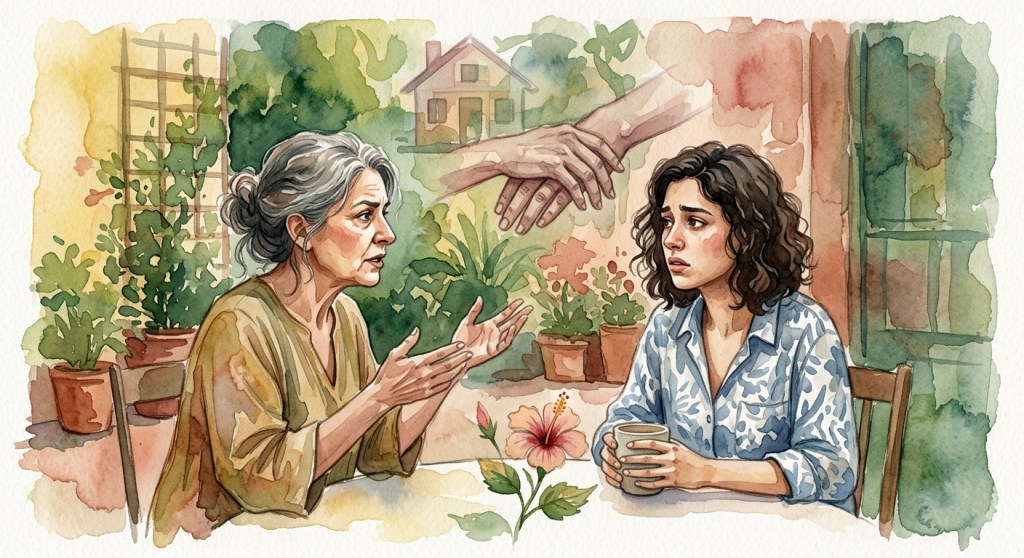
At the heart of this dynamic is Soheir, played by Sawsan Badr, a mother whose love is inseparable from control, surveillance, and rigid adherence to middle-class Egyptian traditionalism. Soheir does not merely represent an individual parent. Instead, she functions as the domestic proxy for collective societal judgment.
For Ola (Hend Sabry), her mother’s expectations serve simultaneously as a protective shield and an invisible cage. Analysing their relationship reveals how maternal pressure acts as both the primary source of Ola’s internalised guilt and the unexpected catalyst for her ultimate liberation and self-differentiation.
From Marital Pursuit to Marital Preservation
To understand Soheir’s influence in Finding Ola, one must recognize the long shadow cast by her initial obsession in Ayza Atgawwez (I Want to Get Married), where her primary mission was securing a respectable husband for Ola. Having achieved that goal, Soheir’s expectation shifted from securing a marriage to preserving it at all costs, viewing divorce as a catastrophic personal and social failure. When Hisham demands a divorce, Soheir’s immediate reaction is not empathy for Ola’s emotional devastation, but panic over social disgrace, financial vulnerability, and the shame of an broken home.
Soheir’s deep-seated belief that a woman’s worth is anchored to her marital status deeply conditions Ola’s initial sense of self. In the early stages of the separation, Ola experiences her husband’s departure not just as a romantic rejection, but as a failure to fulfil her mother’s life project. Soheir’s constant reminders of “what people will say” force Ola into a defensive posture where she feels compelled to fix what is broken, sacrificing her own dignity to placate both her ex-husband and her mother’s fear of scandal.
Motherhood as Self-Sacrifice
Soheir belongs to a generation that measures a mother’s devotion by the total negation of her individual desires. She expects Ola to model this exact path of martyrdom for her own children, Nadia and Ziad. Whenever Ola attempts to reclaim a fragment of her independent identity—whether by taking care of her physical appearance for herself, re-entering the dating world, or spending late hours launching her business—Soheir meets these actions with sharp emotional guilt-tripping.
This conditioning manifests in Ola as a pervasive fear of selfishness. Soheir frequently framing Ola’s personal ambitions as neglect toward her children creates an internal tug-of-war within Ola. Every step toward autonomy is accompanied by an acute sense of moral transgression. Soheir’s expectations instll in Ola the subconscious belief that happiness outside the traditional framework of self-effacing motherhood is illegitimate. Consequently, much of Ola’s psychological struggle throughout the series is not simply fighting against her ex-husband or societal ageism, but unlearning the toxic equation that self-actualisation equals maternal failure.
Rebirth and Resistance
The turning point in Ola’s trajectory occurs when she decides to launch her organic cosmetics brand, Second Chance. Soheir’s reaction to this venture highlights the core clash between security and risk. Soheir urges Ola to accept financial settlement, keep a low profile, and rely on family support, viewing economic independence through entrepreneurial risk as foolish and inappropriate for a divorced woman in her late thirties.
However, Soheir’s resistance unexpectedly acts as a counter-weight that pushes Ola toward true resilience. Confronted by her mother’s persistent skepticism, Ola is forced to transition from seeking external approval to cultivating internal validation. When Ola insists on managing her business despite financial jeopardy and social pushback, she actively dismantles her mother’s blueprint for her life.
Mutual Evolution
Crucially, Finding Ola avoids depicting Soheir as a villain. Her overbearing expectations are rooted in genuine love and a deep-seated desire to protect her daughter from the harsh realities of a patriarchal world that punishes non-conforming women. As Ola stands her ground and asserts her boundaries, the dynamic begins to shift from domination to mutual, albeit reluctant, evolution.
As Soheir witnesses Ola navigate heartbreak, economic hardship, and personal reinvention with newfound strength, her maternal anxiety gradually transforms into pride. Soheir herself is forced to confront the limitations of her own life choices and the compromises she made in the name of tradition. Through Ola’s quiet rebellion, Soheir is granted a subtle, late-in-life awakening of her own, recognising that her daughter’s happiness lies in freedom rather than conformity.
Autonomy Beyond Maternal Approval
Ultimately, Soheir’s expectations are the forge in which Ola’s authentic identity is hammered into existence. While those expectations initially trap Ola in cycles of guilt, compliance, and performance, her journey toward selfhood requires her to separate her mother’s anxiety from her own potential. Ola’s ultimate achievement in Finding Ola is not only finding a new path, but achieving emotional differentiation from her mother—learning to love and respect Soheir without allowing Soheir’s fears to dictate the shape of her life.



Leave a comment