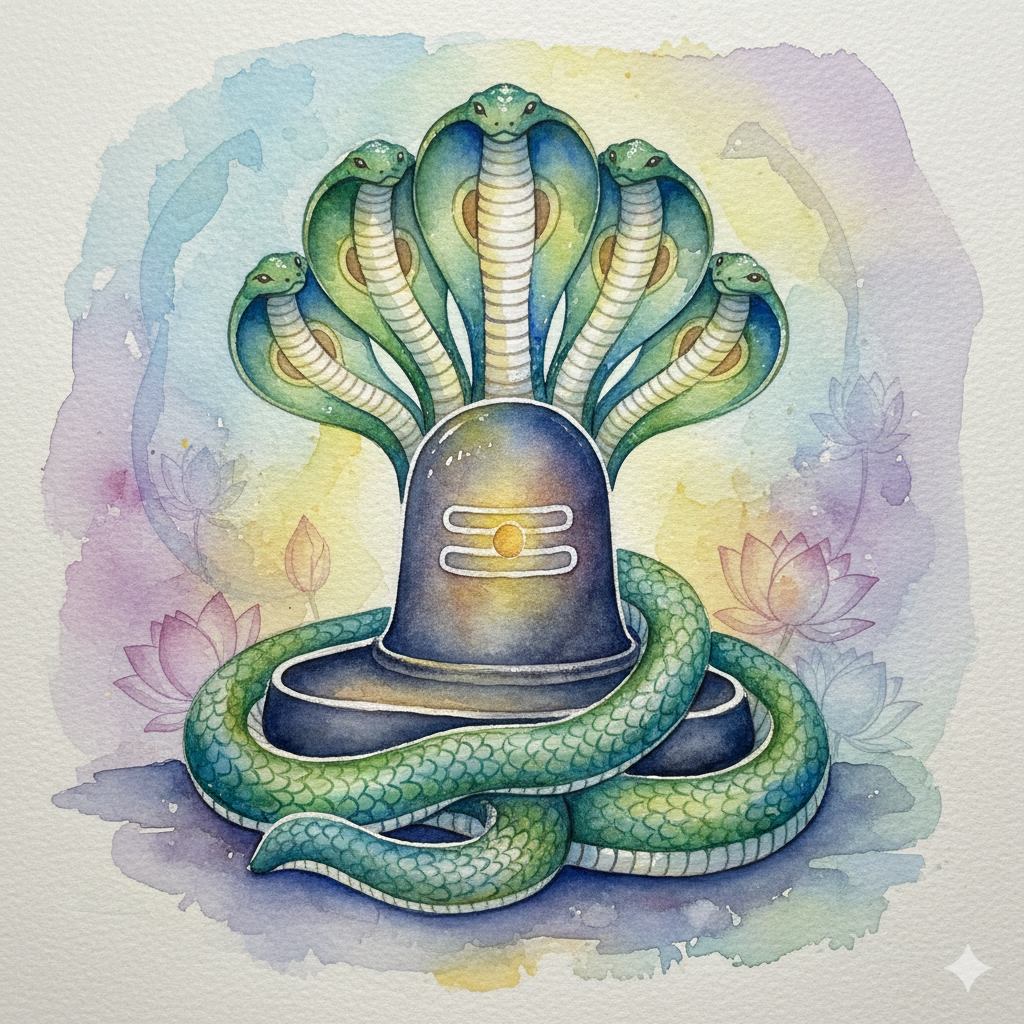
In the vast tapestry of Vedic cosmology and esoteric spirituality, few symbols are as potent and pervasive as the serpent. Representing both the primordial energy of the earth and the celestial mechanics of destiny, the serpent serves as the bridge between our material desires and our spiritual liberation. At the heart of this symbolism lie the Nagas—serpentine beings of great power—and the shadow planets Rahu and Ketu, which together weave what are known as “karmic knots.” These knots represent the tangled webs of our past actions, present obsessions, and the inevitable path toward soul evolution.
The Nagas: Guardians of the Hidden Realms
To understand the celestial influence of Rahu and Ketu, one must first understand the Nagas. In ancient lore, Nagas are semi-divine beings inhabiting Patala, the subterranean realm. They are the keepers of the earth’s treasures, minerals, and esoteric knowledge. More importantly, they are the masters of the “Rasatala,” the fluid energy of the subconscious.
The Nagas represent the raw, unrefined power of nature and the human psyche. They are associated with water, fertility, and the kundalini energy that lies coiled at the base of the spine. When we speak of karmic knots, we are speaking of the Naga Dosha or Sarpa Dosha—the energetic entanglements that occur when a person’s life force becomes trapped in repetitive patterns, often visualised as a serpent tightly coiled around a specific area of life. These beings act as both the jailers of our karmic debt and the potential liberators who grant us the wisdom to ascend beyond our limitations.
Rahu and Ketu: The Celestial Serpent
The astronomical reality of Rahu and Ketu is as fascinating as their mythology. They are not physical planets but rather the mathematical points where the Moon’s orbit intersects the ecliptic. These “Lunar Nodes” are responsible for eclipses, which the ancients described as a great serpent swallowing the Sun or Moon.
In mythology, Rahu and Ketu were originally one being—the demon Svarbhanu. During the churning of the cosmic ocean, Svarbhanu disguised himself to drink the nectar of immortality. When the Sun and Moon alerted Lord Vishnu to the deception, Vishnu severed the demon’s head. Having already consumed the nectar, both parts of the demon remained immortal: the head became Rahu and the headless body became Ketu. This bisection created a permanent polarity in the human experience. Rahu is the insatiable head, forever seeking material gratification and new experiences, while Ketu is the detached body, representing the past, loss, and the eventual dissolution of the ego.
The Nature of the Karmic Knot
A karmic knot, or “Granthi,” is a psychic blockage formed by the tension between these two polarities. Rahu creates the “knot” through desire. Because he has no body, he can never be satisfied; he represents the futuristic, obsessive, and often chaotic drive to achieve what we do not have. Ketu, conversely, holds the “knot” through the weight of the past. He represents the skills we have mastered in previous lives but also the traumas and attachments we refuse to let go of.
The interplay between Rahu and Ketu creates a “karmic axis” in an individual’s life. Wherever these nodes fall in a person’s spiritual map, a knot is formed. For example, if Rahu is placed in the house of career, the individual may feel a frantic, almost serpent-like drive to achieve status, yet they may find that every success feels hollow—a classic Rahu illusion. Meanwhile, Ketu in the opposite house may cause a neglect of personal life or a feeling of being “done” with domesticity, even if that area of life requires attention. The “knot” is the inability to find balance between the hunger for the new and the burden of the old.
Untying the Serpent’s Grip
The path to spiritual maturity involves the conscious “untying” of these knots. This is not achieved by suppressing Rahu’s desires or ignoring Ketu’s wisdom, but by integrating the two. The Nagas teach us that the serpent energy can either be a poison or a medicine. When we are unconscious of our karmic patterns, we suffer the “bite” of the serpent—cycles of greed, anxiety, and repetitive failure.
To untie a karmic knot, one must look toward the Nagas as symbols of wisdom and transformation. In many traditions, the propitiation of Naga deities is a metaphor for cleaning the subconscious mind. By acknowledging the shadow (Rahu) and honoring the ancestral lineage and past lessons (Ketu), the individual begins to straighten the coiled energy.
When the knots are loosened, the energy that was once trapped in obsession or regret is released, allowing the kundalini to rise. This transformation turns the “shadow planets” from harbingers of fate into catalysts for profound spiritual liberation, proving that even the tightest serpent’s coil can be unfurled with awareness and grace.




Leave a Reply