
To enter the Sri Vadapathira Kaliamman Temple is to step out of the frantic cadence of modern Singapore and into a space where time feels thick and layered. While the main sanctum vibrates with the fierce, protective radiance of the Divine Mother Kali, it is the shrine of Sri Nageshwari Devi that holds a different, more subterranean frequency.
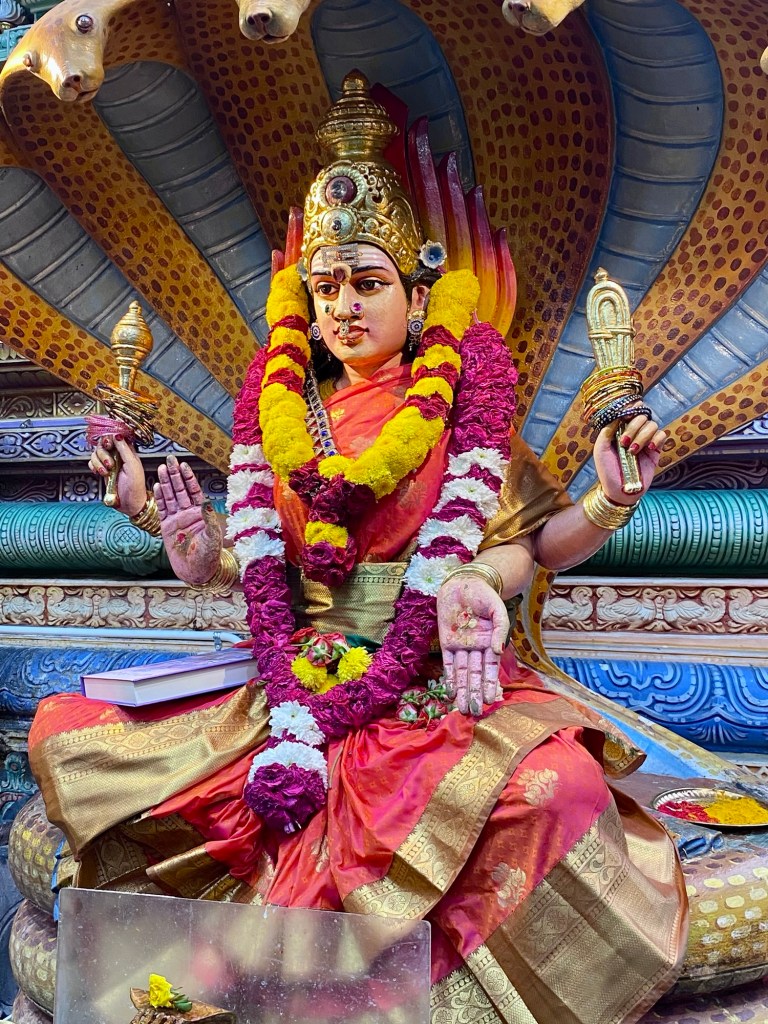
In my travels across the island’s sacred geography, this is the only place where I have encountered her specific presence manifested in such a dedicated manner. She sits there patiently, not as a peripheral figure, but as a sovereign force, embodying the ancient serpentine energy that predates the formal structures of our modern understanding.
Her presence here feels like a bridge to a world where the divine was not yet abstracted by religion and philosophy but felt in the shifting of the earth and the shedding of skin. Standing before her, one does not merely see a statue; one encounters a visual liturgy of power and cyclical renewal. The quietude around her sanctum is heavy with the weight of “naga-shakti,” a force that is at once terrestrial, coiled within the roots of the world, and celestial, reaching toward the transcendent through the spread of her protective hoods.
The Iconography of the Unseen
The depth of Sri Nageshwari Devi lies in her duality. To the casual observer, the cobra canopy is a symbol of protection, but to the seeker, it represents the awakening of the consciousness that lies dormant within the human frame. There is a solemnity in her gaze that seems to bypass the intellect entirely, speaking instead to the primal instincts of the spirit.
In this specific corner of the temple, the atmosphere is charged with the essence of the serpent—fluid, silent, and inevitable. It is a rare privilege to find such a concentrated expression of this lineage. Whether there are other such shrines hidden elsewhere in the city becomes almost irrelevant when one is standing here; the potency of this encounter feels absolute. It is as if the earth itself has opened a vein to allow this ancient, serpentine grace to flow into the heart of the city, offering a sanctuary for those who understand that true power often moves in solitude and resides in the silence of the sacred.
A Communion with the Serpent Queen
Worship at the feet of Nageshwari Devi is an act of acknowledging the forces that govern our inner transformations. The rituals here—the abishekam, the lighting of the lamps, the scent of sacred substances—serve as an anchor for the wandering mind. She is the guardian of the thresholds, the one who watches over the transition from the old self to the new. In a world that prizes the fast and the visible, her shrine demands a slower, more profound engagement.
Leaving the temple, the image of the hooded queen remains etched in the mind like a seal. Her presence at Vadapathira Kaliamman is a reminder that even in the most modern of landscapes, the ancient currents of the divine remain accessible to those who know where to look. It is an intersection of the human and the elemental, a place where the serpentine grace of the Devi offers both a shield against the world and a mirror to the infinite potential coiled within us all.





Leave a Reply