
The Aghori, an ascetic order of Shaivite sadhus, hold a unique position in Hindu spirituality. Their path, known as Aghora, is characterised by its radical non-dualism, which actively embraces societal taboos and notions of ‘impurity’ to transcend all illusory distinctions and attain liberation (moksha). Central to their esoteric practices is the worship of Shiva in his most fearsome manifestation, Bhairava, and within this powerful pantheon, the youthful form of Batuka Bhairava holds significant importance.
Bhairava: The Divine Destroyer of Illusion
For the Aghori, Lord Shiva, particularly as Bhairava—the “Frightful One” or “Destroyer of Fear”—is the ultimate Guru and the form of the Supreme Reality (Para Brahman). Bhairava embodies the destructive and transformative power of the cosmos, the fierce energy necessary to annihilate the ego and all obstacles on the spiritual path.
This deity is fundamentally connected to the Kapalika tradition, from which the Aghori sect descends, and is often worshipped in cremation grounds smashana, the Aghori’s preferred abode for meditation and ritual. It is this protective and guiding aspect of the deity that inspires deep reverence, serving as a powerful force for those who navigate challenging spiritual territories.
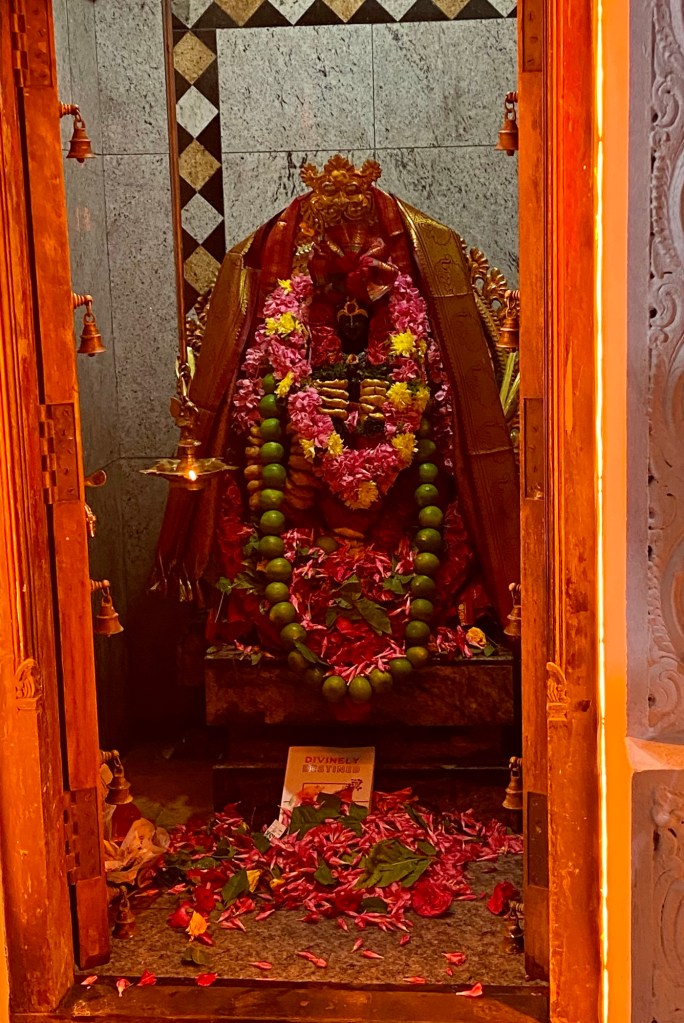
Batuka Bhairava: The Youthful Protector
Batuka Bhairava, also known as Vatuka Bhairava, is depicted as a young, often nude, youth—a kumar or boy—who is simultaneously gentle soumya and formidable. This seemingly paradoxical nature is key to his significance. While Kala Bhairava is the Lord of Time and the embodiment of sheer destructive power, Batuka Bhairava is the divine child, or the immediate, protective manifestation of the fierce Guru Tattva the essence of the teacher.
In iconography, he is typically shown carrying the trident trishula and the skull cup kapala, and is often accompanied by a dog, his vahana vehicle and a symbol of righteousness dharma. For the Aghori, the skull cup is a tangible instrument used in rituals, a profound affirmation of non-duality where the most taboo object becomes a vessel for the divine.
This accessibility and protective nature is perhaps why devotees find deep personal resonance with him, seeing him not just as a protector, but as a direct source of creative and spiritual inspiration.
Embracing the Extremes: Batuka and Aghora Philosophy
The Aghori path seeks to eliminate the fear of death, impurity, and social censure by deliberately engaging with them. They practice in cremation grounds, use human remains, and embrace substances considered ‘polluting’ in orthodox Hinduism.
The worship of Batuka Bhairava is perfectly aligned with this philosophy for several reasons. By worshipping the terrifying aspect of the divine in a youthful, approachable form, the Aghori affirm their core belief that all dualities—fear and protection, fierceness and innocence, life and death—are ultimately illusory manifestations of the same singular reality.
The Healing Grace of the Young God
While the Aghori path is characterised by its fearsome austerity, a deeply compassionate, benevolent power is frequently attributed to Batuka Bhairava—the power of spiritual and physical healing. This healing is rooted in the deity’s capacity to destroy the cause of affliction by dismantling negative influences and the spiritual ignorance avidya that generates suffering.
The healing he bestows is comprehensive, and his fierce energy is invoked to actively combat and eliminate negative forces, psychic attacks, and the effects of ill will, which are often considered the root cause of many ailments in Tantric traditions. Furthermore, by removing avidya (ignorance) and inner blockages such as fear, anxiety, and mental stress, Batuka Bhairava facilitates spiritual clarity, which is the foundational step toward all true healing. The practices associated with him, such as chanting his powerful mantras, are believed to enhance mental peace and spiritual strength.
For the Aghori, whose intense practices involve dangerous energies, the protection afforded by the young Bhairava is critical, as this shield allows the spiritual aspirant to safely push the boundaries of consciousness without succumbing to physical or psychological harm.
Many Aghori gurus themselves are revered in rural populations for their purported healing powers siddhis, which are directly gained through their intense penance and deep connection to forms of Shiva like Batuka Bhairava. They use this acquired power, often combining potent mantras with herbal knowledge, not for personal gain but as a service to those seeking relief from various ailments, affirming the deity’s role as a benevolent force who uses destructive power only to facilitate profound well-being and liberation.





Leave a Reply