
From its practical uses to its metaphysical properties, gemstones have mesmerised mankind since they were first discovered. As a young man, I was fascinated by how jewellers would scrutinise diamonds under a microscope to validate its authenticity.
When it comes to gems, the naked eye is a tool of deception. It often cannot tell the difference between a synthetic gemstone and a genuine one. They say that seeing is believing–but when it comes to treasures of the earth, we simply cannot trust what we see.
Perhaps we could say the same about the people that come into our lives.

Jade
In ancient China, jade was believed to preserve the deceased body from decay. Nephrite–along with jadeite–are the two different minerals that are commonly known as jade. Nephrite, however, is far more common than jadeite. While both are calcium magnesium silicate hydroxides which are structurally identical; in actinolite, some of the magnesium is replaced by iron.
Despite nephrite’s glass-like appearance as jewellery, do not be fooled. Nephrite is composed of a mat of tightly interlocking fibres which is tougher than steel. In places like China and New Zealand–where nephrite is found–this property of toughness allowed it to be utilised very early on for tool-making and weaponry.
The Maori of New Zealand
The mere is a traditional hand to hand, one-handed weapon of the Māori of New Zealand. It is a short and broad-bladed weapon in the shape of an enlarged tear drop and was used to strike or jab an opponent in the body or the head. Usually made from nephrite or greenstone, it is a symbol of chieftainship among the hereditary Māori leaders of the clan.
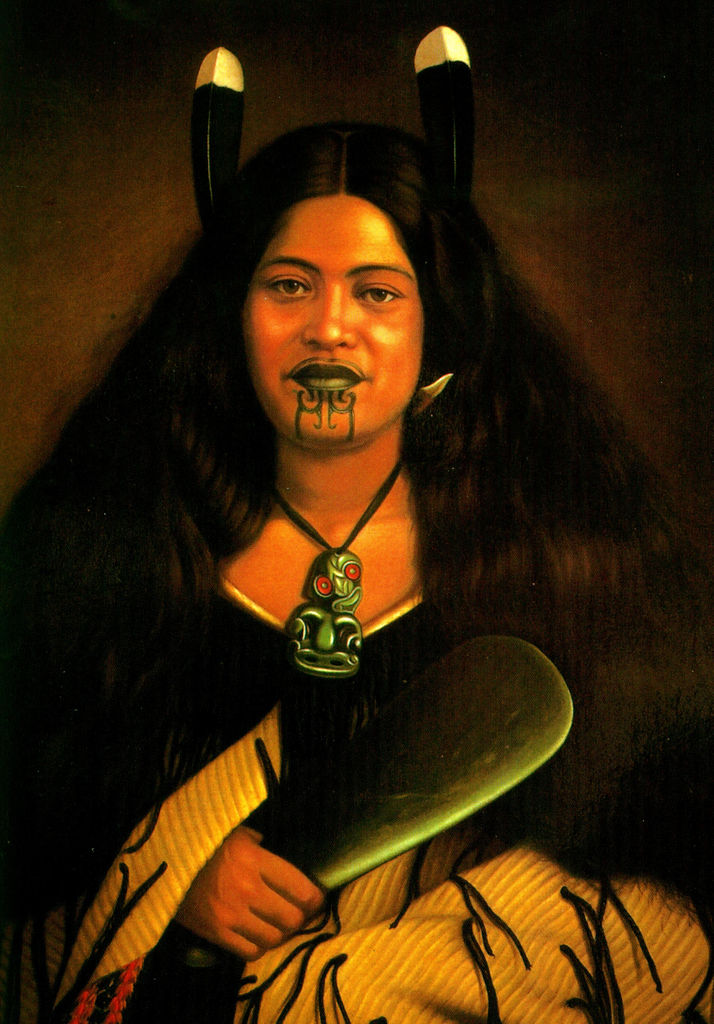
The Maori called nephrite Pounamu. In New Zealand, the gemstone is found only in South Island. Due to this, the island was originally named Te Wāhi Pounamu the place of pounamu, but over time this name changed to Te Wai Pounamu the greenstone waters.
All tribes have stories of pounamu artefacts and these items are often given names. They are seen as tapu sacred and are considered to have mana status. They serve as talismans to remind people of the stories of battles and the great events in which their ancestors took part. They were also a physical representation of connection–through whakapapa genealogy–to venerated ancestors, and the artefacts were often remembered in songs.
Heirlooms or weapons of great status–often made of nephrite–were exchanged as a symbol of a peace agreement. Nephrite was used in a metaphorical sense to seal peace agreements. It pays homage to the concept of tatau pounamu, a greenstone door which is durable, strong and highly valuable. The greenstone door symbolised a passageway between the territories of warring parties. Each party to the peace pact chose a hill to represent the greenstone door and this door was closed to all who wanted to draw blood.
The enduring nature of nephrite symbolised the permanence of the peace agreement.

 Twinn Swan
Leave a reply to What is Wealth? From Silk Road to Silicon Valley – The Mercantile Cancel reply