
The concept of Naga Dosha emerges from a profound karmic understanding in Hindu philosophy, where negative actions against serpents and women in past lives create enduring spiritual and energetic consequences. While this can, and is often viewed as mere superstition, it is a core tenet of Hindu philosophy that violations against certain primordial forces can reverberate through lifetimes, manifesting as both psychological patterns and physiological conditions.

The Shakti Betrayal: Fracturing the Feminine Principle
At its core, harming serpents represents a fundamental disruption of cosmic energies. In Hindu cosmology, snakes embody the most primal life force – the Kundalini energy that lies coiled at the base of the human spine. They serve as guardians of earth’s hidden wisdom and underground waters, making them vital connectors between the material and spiritual realms.
When one violates these sacred beings in past incarnations, the karmic imprint manifests as a peculiar constellation of symptoms: persistent phobias of heights or water that have no apparent cause in this lifetime, an inner voice that seems to hiss with self-doubt, and various physical afflictions like chronic back pain or skin disorders that modern medicine struggles to explain. These aren’t random maladies, but the body’s cellular memory of that ancient transgression, expressing itself through the nervous system and epidermis.
Nevertheless it must be noted that there are two possibilities here. One is that this issue is ancestral, as in, it is genetic; and the other is that it stems from past lives.
The Sacred Interconnection: Why Serpents and Women Share Karmic Bonds
The component of Naga Dosha related to deceiving women carries its own distinctive signature. Women in this cosmology represent Shakti – the dynamic feminine principle that animates creation itself.
When one betrays this energy through manipulation, broken vows or emotional violence in past lives, the karmic debt surfaces as profound disturbances in one’s creative and relational capacities. The psyche develops unconscious blocks against intimacy and trust, while the body may rebel through hormonal imbalances or reproductive challenges.
These manifestations aren’t punishments, but rather the universe’s way of compelling the soul to confront what it has avoided – the integration of feminine wisdom and the honouring of sacred commitments.
The Neurospiritual Echo: How Past Karma Becomes Present Biology
The connection between serpents and women in this karmic framework is deeply intentional. Both represent the untamed, cyclical aspects of existence – the serpent with its seasonal moulting, the feminine with its lunar rhythms. Both serve as portals to subconscious wisdom.
To harm either is to disrupt the fundamental flow of prana, or life force, creating what could be described as a spiritual short circuit. The resulting Naga Dosha becomes less about external misfortune and more about internal dissonance – a soul-level disharmony that colours one’s entire experience of reality.
The Enduring Truth of Karmic Patterns
Modern neuroscience offers an intriguing parallel to this ancient wisdom. The body does indeed remember what the conscious mind forgets. Neural pathways formed through repeated experiences – whether in this life or past ones – create default patterns of thought and behaviour.
The limbic system becomes conditioned to respond with hyper-vigilance, the neurochemical balance tilts toward anxiety over trust, and the physical form expresses through symptoms that defy conventional diagnosis. In this light, Naga Dosha appears not as primitive fear-mongering, but as an advanced understanding of how energy and consciousness interact across the continuum of time.
Why Surface Solutions Fail
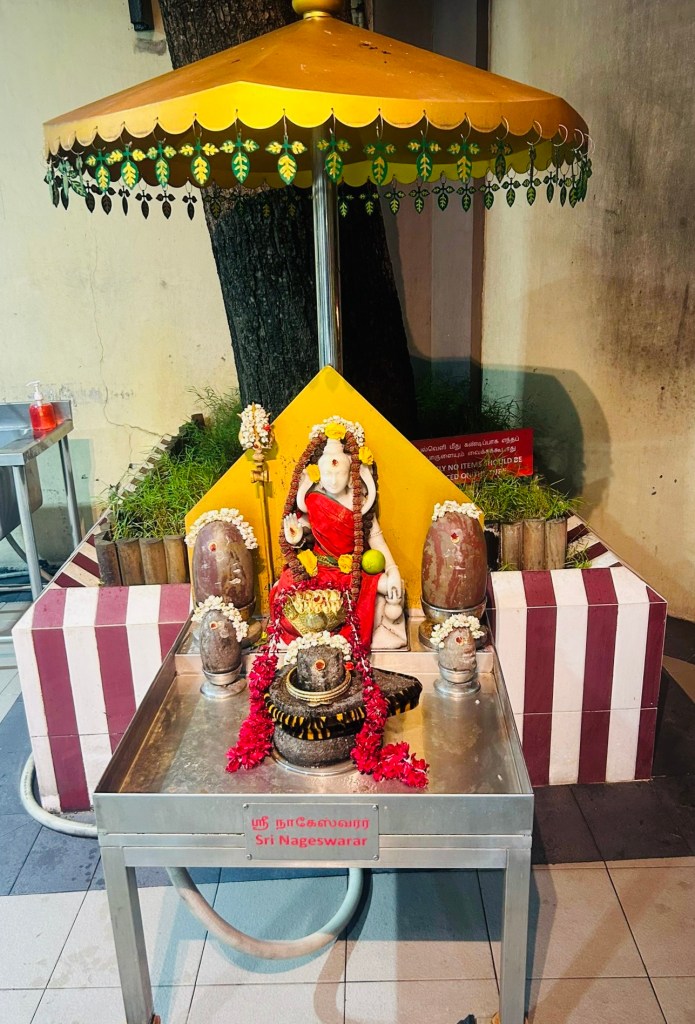
The persistence of these effects across lifetimes speaks to their fundamental nature. They represent core disturbances in how the soul relates to primal creative forces. This explains why superficial remedies often fail – the condition demands genuine karmic renegotiation rather than mechanical ritual. The local Nagaraja shrine functions not just as a place of worship, but as an energetic interface where these deep patterns can be recognised, honoured, and ultimately transformed.
It becomes the sacred space where one’s most ancient shadows can finally be brought into the light of awareness.





Leave a Reply