I lived in Japan for four years, and during that time I visited Enoshima Shrine (江島神社,) twice. The first visit took place during a programme organised by JICA. The second was with a friend who had come to visit me from overseas. I walked through the shrine both times without knowing the deeper significance of what I was encountering.
The shrine honours Benzaiten (弁才天), a syncretic manifestation of the Goddess Saraswati, whose worship reached Japan between 552 and 800 CE. During my years in Japan I knew nothing of this. A Goddess from India had been received into Japanese devotion more than a thousand years earlier, and she stood at the centre of the place I was visiting. The deeper significance of the shrine reached me only years after I had left the country.
After the Catfish came out of that delayed understanding. I completed the book eight years after leaving Japan, so the shrine worked on me across a long distance of time and geography before it became a work of sacred literature. By then I could finally see what I had walked past, a sacred site where a Hindu goddess and Japanese worship had become one. That recognition shaped the book itself, which is syncretic and blends Shaiva and Shinto elements.
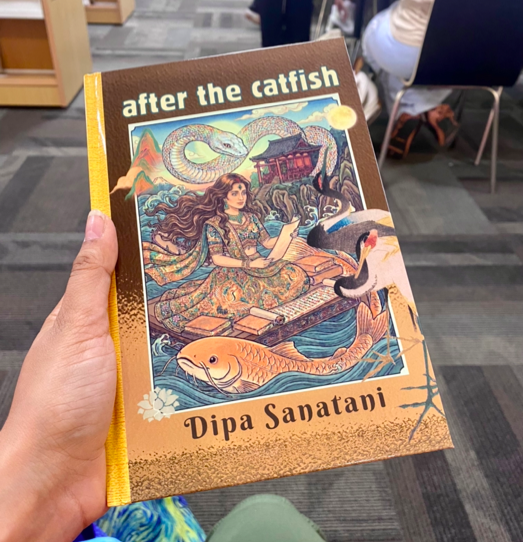
Japan has long imagined a giant catfish beneath the islands whose movements shake the earth, and the book places that figure alongside the Naga, the serpent power that Shaiva tradition holds as sacred. Two lands that live with the trembling ground each developed a way of revering what lies beneath it and the book lets the two cultures meet.
Two visits to a shrine whose history I had not yet learned. Four years in a country that lives above restless ground. Eight more years before the last page was written. The book, with its catfish and its serpents, now lies at the feet of Sri Triambakeshwar, and carries within it the memory of the shrine where it all began, where Benzaiten has been honoured since her worship reached Japan from India more than a thousand years ago.
In After the Catfish, I gather the Naga of Shaiva tradition and the catfish of Japanese earthquake belief into a single act of reverence for what stirs below the earth.
Om Namah Shivaya.





Leave a Reply