
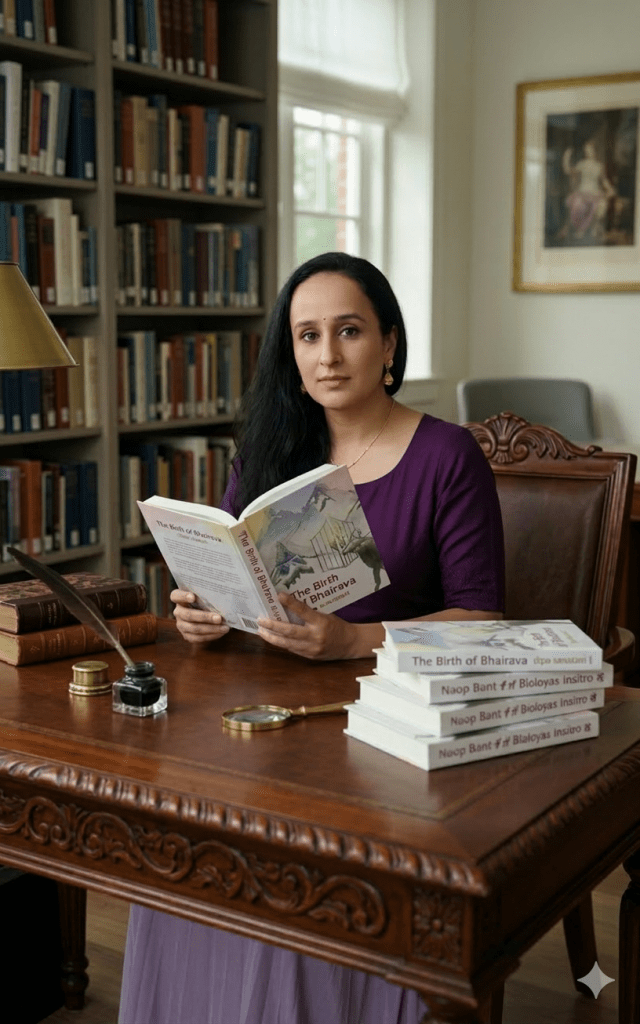
I wrote The Birth of Bhairava to chart the exact moment a soul refuses to participate in its own diminishment.
For so long, human history and sacred myth alike have been shaped by men like Daksha—figures for whom piety is merely a performance, and spiritual assembly a stage for ego.
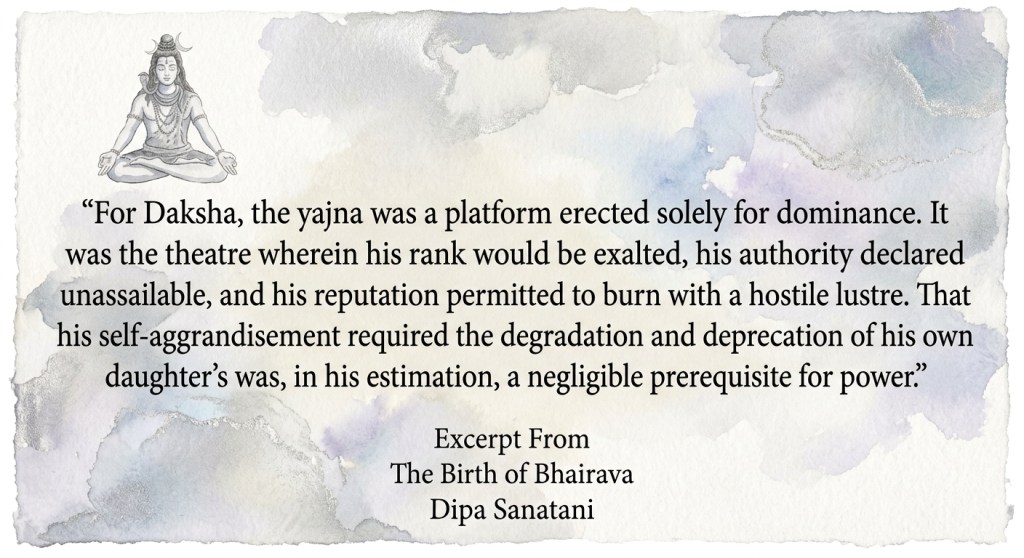
To Daksha, the yajna was never about reverence or communion with the Divine–it was an exercise in dominance. It was a calculated demonstration of rank, a monument to unassailable authority, and a calculated public spectacle designed to burn with a cold, hostile lustre.
What struck me most while writing was the quiet, casual cruelty inherent in that kind of power. Daksha’s self-aggrandisement did not just happen alongside the degradation of his daughter, Sati; it demanded it.
In his estimation, her humiliation was not a tragic byproduct—it was a negligible prerequisite. A necessary price to pay for the preservation of his status. How often do we see this pattern repeated in our own lives? How often are the vulnerable asked to absorb the violence of another’s pride, expected to stay silent so that a false authority might remain intact?
I wanted to explore what happens when that silence shatters.
Bhairava is not born out of polite disagreement or passive acceptance. Bhairava is the fierce, uncompromising response to systemic arrogance and sacred betrayal. He is the terrifying truth that arises when hypocrisy reaches its absolute peak. In writing this story, I was not retelling an ancient myth; I was investigating the destructive nature of unchecked ego and the elemental, ferocious power required to destroy it.
I wrote this book to give voice to the outrage that follows betrayal, to honour the sacred dignity that refuses to be trampled, and to remind us that when power is built on the destruction of the innocent, it invites a reckoning that will burn the entire stage to ashes.



Leave a comment