
In the quiet moments of devotion before the eighteen-armed Mother, the technicalities of scripture fade away, replaced by a sense of abhaya fearlessness. Worshipping Lakshmi-Durga is not merely about asking for wealth or victory; it is about seeking refuge in a Mother who is both soft enough to hold your sorrows and strong enough to fight your battles.
She exists as a unique bridge for the soul, standing between the raw, destructive power of the void and the vibrant, creative pulse of the material world. To stand before her is to witness a divine paradox: a warrior who is at total peace, and a provider who knows the value of a hard-won victory.
The Mother Who Understands Every Struggle
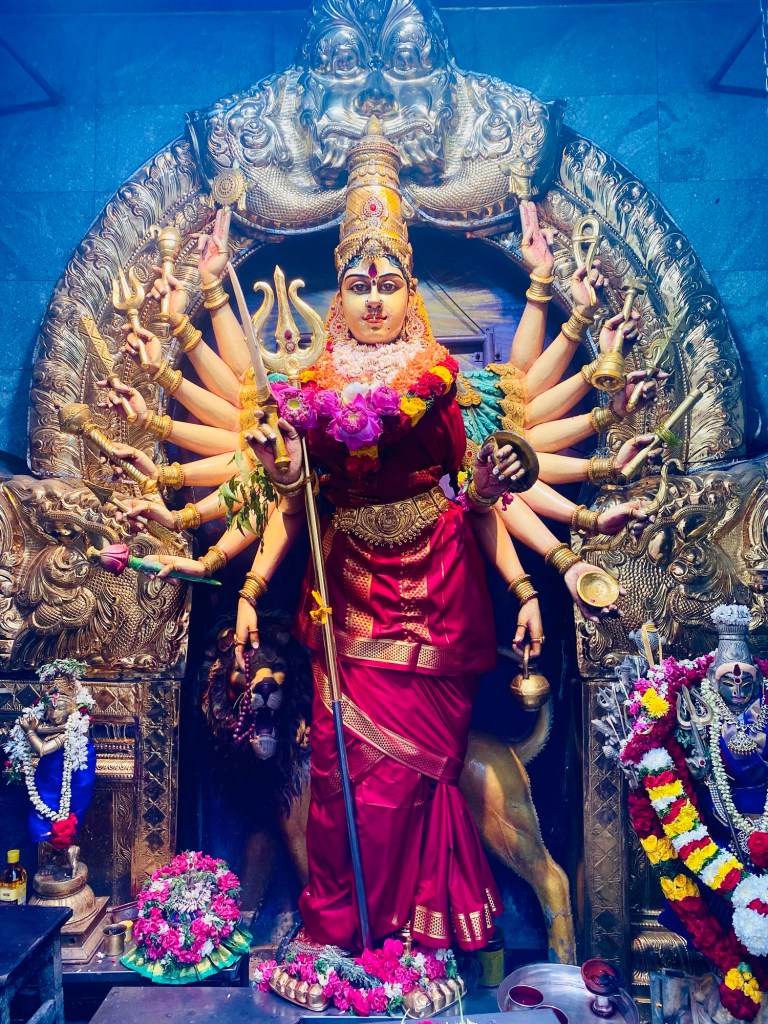
While many goddesses represent a single aspect of life, Lakshmi-Durga is unique because she represents the completeness of a woman’s heart and the multifaceted nature of human endurance. In her eighteen arms, she carries the tools for every possible situation a devotee might face, suggesting that no problem is too small for her attention nor too large for her strength.
To the person struggling with a difficult career or a loss of purpose, she manifests as the Lakshmi who grants “Lakshya,” a divine sense of focus and goal. Simultaneously, to the person feeling bullied, small, or spiritually attacked, she becomes the Durga who raises her “Trishula” in defense, creating a sacred boundary that no negativity can cross.
Devotion to her is built on the belief that we should not have to choose between being peaceful and being powerful. She teaches the devotee that it is possible to be a person of great kindness—symbolised by the delicate lotus—while possessing a backbone of steel represented by the indestructible thunderbolt. This integration of qualities allows the seeker to navigate the modern world without losing their gentleness, trusting that the Mother provides the strength to remain upright even when the winds of life are at their most turbulent.
The Deep Symbology of the Eighteen Tools of Grace
Instead of seeing eighteen weapons of war, the devotee looks upon her many hands and sees eighteen distinct ways the Mother reaches out to help. When she rings the sacred bell, its resonance is believed to shatter the glass walls of anxiety and negative self-talk, clearing the mental noise so the devotee can finally hear the quiet whisper of their own inner voice. This sound is the call of clarity, reminding the soul that it is not alone in its confusion.
Her bow and arrow are not merely instruments of combat but represent the Mother’s unwavering promise to stay focused on the devotee’s specific needs, no matter how far that person may have wandered from their intended path. Like a mother watching a child from a distance, her aim is always true, directed toward the ultimate well-being of the seeker. Furthermore, the water pot she holds, the kamandalu symbolises her ability to wash away the heavy dust of the world. It offers a spiritual cleansing to those who feel emotionally exhausted or spiritually drained by the relentless demands of daily life, refreshing the spirit with the cool waters of her compassion.
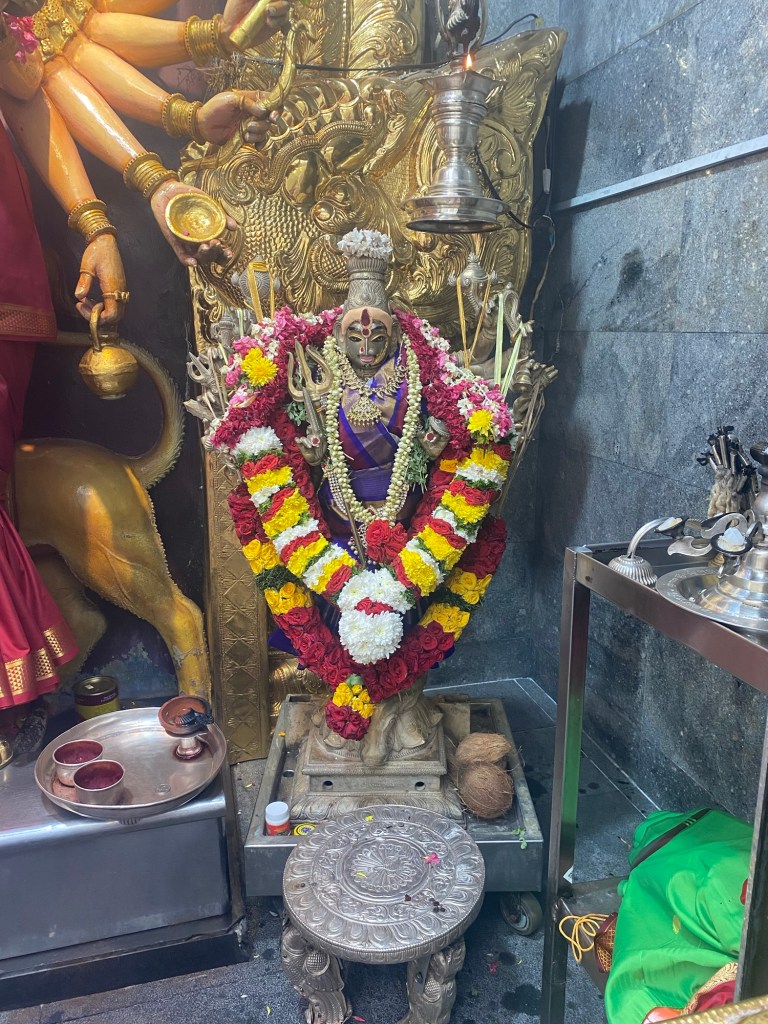
The Golden Complexion as the Warmth of the Sun
Scriptures describe her skin as the colour of Atasi flowers or molten gold, but devotionally, this isn’t just an aesthetic detail; it represents the literal warmth of a mother’s embrace. Unlike the Ugra fierce forms that can sometimes feel intimidating to the uninitiated, the golden glow of Lakshmi-Durga is meant to feel like the sun on one’s face after a long, bitter winter. It is the light of hope that exists before the day has even begun.
When a devotee looks at her golden form, they are reminded that no matter how dark their current ‘night’ may be, the Mother’s presence is a permanent dawn within the heart. This golden light is said to permeate the aura of the worshipper, turning their fear into a quiet, steady confidence. It is a reminder that prosperity is not just about what we have in our hands, but the light we carry in our souls, a light that Lakshmi-Durga generously shares with anyone who turns their gaze toward her.
The Destroyer of Inner Obstacles and the Buffalo of the Mind
The most beloved story of Lakshmi-Durga is her victory over the buffalo-demon, Mahishasura, which carries a deep internal meaning for the practitioner. In a devotional sense, we all carry a “Mahisha” within us—those heavy, stubborn parts of our nature that are lazy, stuck in bad habits, or resistant to growth. This buffalo-energy is the tamas the darkness that makes us feel like we cannot change.
Worshipping her in this context becomes an act of surrender. The devotee does not try to fight their own shadows alone; instead, they say, “Mother, I cannot overcome my own stubbornness through my own will. Use your eighteen hands to guide mine.” She is seen as the one who gently but firmly nudges the soul toward its highest potential, not through the pain of punishment, but through the overwhelming and transformative beauty of her grace. She dismantles the ego not to leave the devotee empty, but to make room for the divine abundance she is eager to pour into them.
A Relationship of Total Trust and Divine Provision
Ultimately, the devotion to Lakshmi-Durga is about a state of total provision that transcends the material. She is the “Annapurna” who feeds the hungry soul with wisdom and the “Mahishasura Mardini” who stands guard over the peace of the home. To her children, she is the ultimate assurance that they will never have to face the world unprotected or unprovided for.
She stands at the threshold of one’s life, serving as the guardian of the transition between who we were and who we are becoming. By placing one’s trust in the eighteen-armed Mother, the devotee accepts a life where the world may remain chaotic, but the heart remains a palace of prosperity. She ensures that her seekers walk with “Aishwarya”—a divine dignity that comes from knowing that the Queen of the Universe is personally invested in their journey.

 Twinn Swan
Leave a comment