
The spiritual significance of mustard oil is a study in intensity, grounding, and the transformative power of the shadow elements of the soul. Unlike the mild, solar energy represented by clarified butter or lighter oils, mustard oil is dense, pungent, and deeply earthy.
It belongs to the domain of the subterranean and the protective, acting as a spiritual anchor for those navigating the difficult terrains of human experience.
In many ancient traditions, particularly within the Vedic framework, mustard oil is the primary medium for communicating with the energies of the colour black as a representation of the infinite, the unmanifest, and the void that consumes all negativity.

Saturnian Influence and the Absorption of Karma
The association with the colour black is most prominently seen through the governance of Shani Saturn, the celestial taskmaster who embodies discipline, karma, and the colour of the deep cosmos. Black is the only colour that can absorb all other frequencies without changing its own nature; similarly, mustard oil is used in rituals to absorb the ‘blackness’ of misfortune, the evil eye or stagnant ancestral karma.
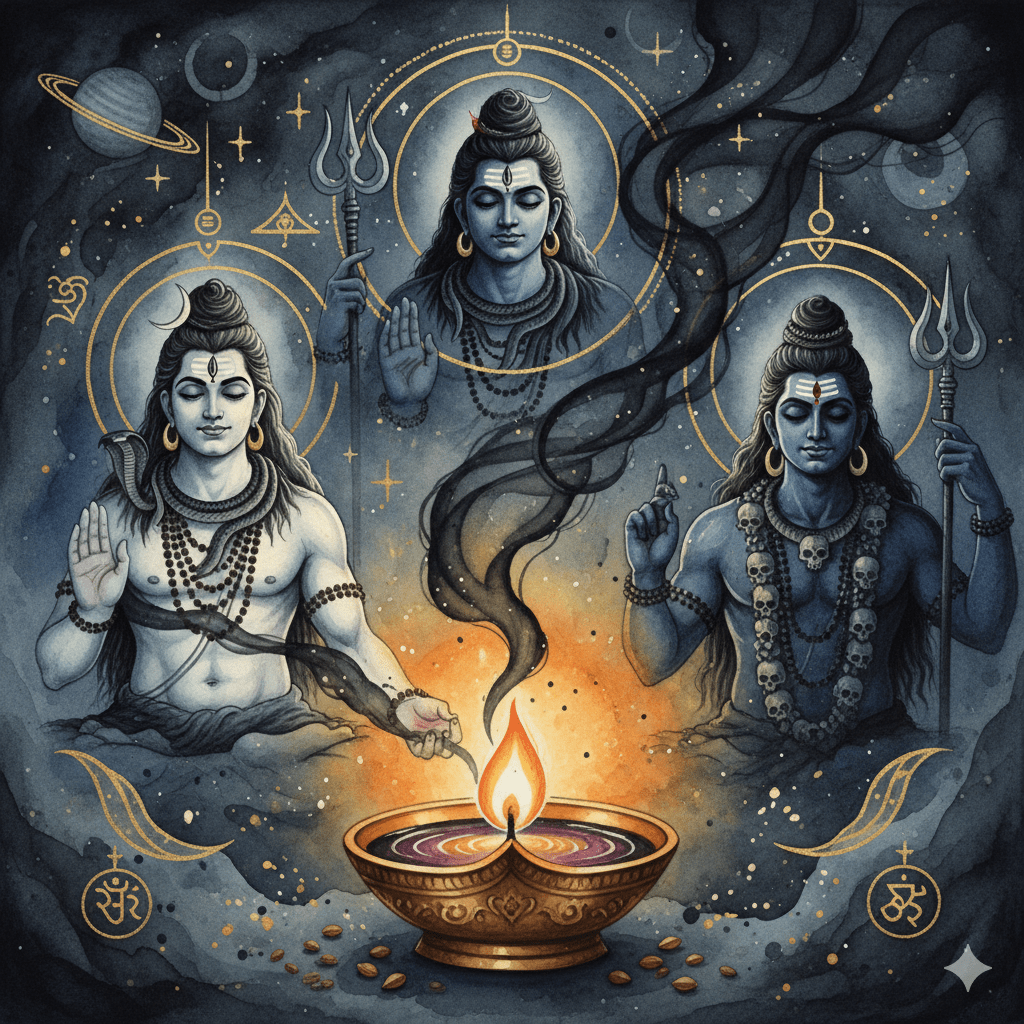
When a practitioner lights a mustard oil lamp, they are often performing an act of spiritual alchemy. They are taking the heavy, dark energies of their life—symbolised by the oil’s association with the dense, dark-hued mustard seed—and offering them to the flame to be transmuted into light.
The Sacred Soot: Protective Applications of Black
This connection to the colour black extends to the physical appearance of the wick and the soot produced by the oil. In many protective rituals, the black carbon residue from a mustard oil flame is collected to create ‘kajal’ or ‘collyrium,’ which is then applied to the forehead or eyes of children and vulnerable individuals.
This black mark serves as a spiritual lightning rod, intended to catch and neutralise any piercing or envious glances from others. Here, the colour black acts as a shield, mirroring the oil’s inherent property of being a thick, protective barrier against external psychic interference.
Purifying the Tamasic Realm
Lighting a mustard oil lamp is a deliberate engagement with the tamasic or heavy qualities of existence. While most spiritual practices seek to transcend the heavy to reach the light, the use of mustard oil suggests that one must first acknowledge and purify the darkness within.
The mustard oil lamp represents ‘the burning of the black’—the process of taking one’s darkest fears, obstacles, and limitations and allowing the fire to consume them. Since the oil is pungent and its smoke is sharp, it is believed to pierce through the thick atmosphere of a depressed or haunted home, clearing out the unseen entities that thrive in stagnant, dark corners.
Grounding the Light in the Fertile Void
Furthermore, the spiritual property of mustard oil is rooted in the concept of grounding the light. In many esoteric circles, the colour black is seen as the fertile soil from which all life springs. By using an oil that is so closely aligned with this dark, terrestrial energy, the practitioner ensures that their spiritual aspirations are not just lofty dreams, but are rooted in the reality of their physical and karmic existence.
To light a mustard lamp is to declare that even in the deepest blackness of one’s trials, there is a fuel for transformation, and that the most potent protection often comes from facing the dark with a steady, unflinching flame.


 Twinn Swan
Leave a reply to Arun Singha Cancel reply