
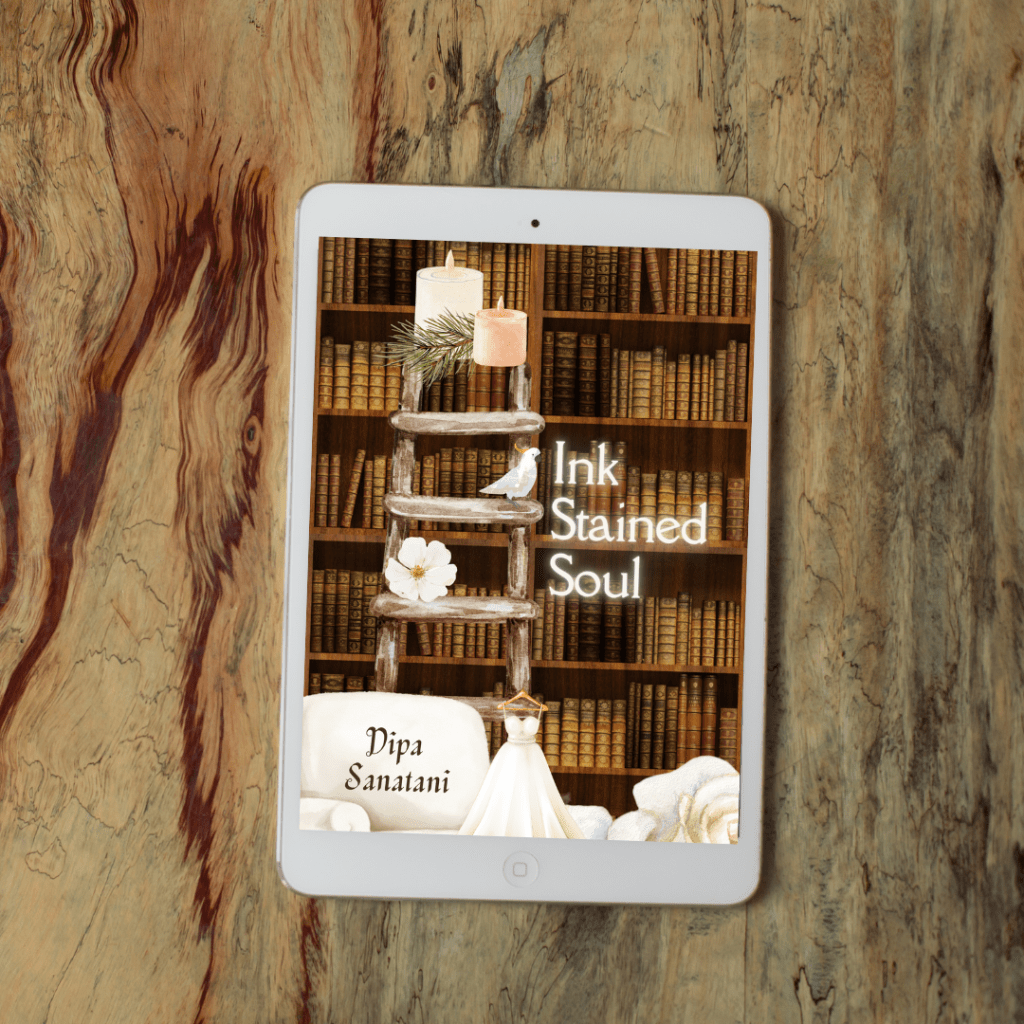
In my prose-poetry collections—The River Empress and Ink Stained Soul—I dive into the theme of rejection and how some individuals, for reasons beyond their control, find themselves on the margins of society, standing on the outside and looking in. In both these stories, the protagonists, while pursuing different paths, mirror how mainstream society treats individuals who are unconventional or following an unusual path in life.

Rejection
This theme of rejection is not just a literary device for me. At certain pivotal turning points in my life, it was a lived reality. It was one that I not only witnessed, it was one that I personally experienced, over and over again. There is a particular haunting ache in being set apart–not necessarily by choice, but due to one’s circumstances or identity. It’s a quiet pain, one that is invisible to those who move easily within the boundaries of what society deems acceptable, mainstream, orthodox or normal.
Through my writing, I wanted to give voice to that experience: the sense of watching life unfold from a distance, of longing to belong while knowing that the very things that make you unique are the ones that keep you apart.
The Paradox
This paradox: yearning for connection while being set apart by your own distinctiveness lies at the heart of both The River Empress and Ink Stained Soul. My characters inhabit a liminal space, where their differences are a barrier to societal acceptance.
They observe the rituals and rhythms of the mainstream, sometimes aching to join in, yet always aware that their perspective, their very essence, marks them as unconventional. It’s a bittersweet vantage point: there’s a certain clarity that comes from standing on the outside, but also a deep ache that never quite fades.

In giving voice to these experiences, I hope to offer solace to anyone who has felt similarly unseen or misunderstood. There is a quiet strength in embracing one’s uniqueness, even when it comes at the cost of belonging. Through my writing, I try to transform the pain of rejection into something beautiful and resonant: a reminder that those who stand on the margins often see the world in ways that are profound, necessary and uniquely their own.
In The River Empress, the protagonist’s journey is shaped by forces beyond her control. She is swept along by currents–of expectation, tradition, and misunderstanding–that she did not create, and yet must navigate. Her story, ultimately, is not just about exclusion, but about resilience: the way she learns to find meaning in her solitude, to draw strength from her difference. The river, for her, becomes both a barrier and a journey–a symbol of the ever-present divide between self and society, but also a source of renewal and possibility.
Ink Stained Soul explores rejection from a different angle, but the core remains the same. Here, the protagonist’s creativity, insight and sensitivity set them apart from the mainstream world of traditional book publishing. The metaphorical ‘Ink Stained Soul’ is a mark of their unadulterated passion, but also a visible sign of their otherness. They are misunderstood and repeatedly rejected, for seeing and perceiving the world through a different lens.
Yet, it is precisely this difference that awakens their destiny to a higher and greater calling than they ever could have imagined. The poetry in their soul is both a challenge and a gift–one that requires them to endure trials, to navigate loneliness, misunderstanding and self-doubt before its true power is revealed. These trials become a rite of passage, shaping their character and deepening their understanding of themselves and the world around them.
What I’ve learned, both in writing these collections and in reflecting on my own place in the world, is that rejection can be a crucible. It burns away illusions, leaving behind a sharper sense of self-identity that does not rely solely on the external world and its metrics and measure. It forces us to confront who we are when we are stripped of external validation. For those on the margins, there is pain, yes, but also a kind of freedom–the freedom to define oneself and to create meaning from the fragments left behind.
Society often fears what it does not understand, and so it rejects and pushes away those who are different. But it is in those very margins where some of the richest stories are born. The outsider sees the world with fresh eyes, dares to feel with an unguarded heart, and creates and re-creates from a place of authenticity as opposed to orthodoxy. By highlighting these voices in my work, I hope to remind readers and myself that there is dignity and beauty in standing on the outside and looking in.
Rejection is never easy, but it can be rewarding in its own right. Repeated rejection can teach us humility, resilience, and the value of forging our own path and living one’s life outside of the orthodoxies of tradition.
And sometimes, in the quiet and solitary space beyond the crowd, we, at long last, discover who we truly are.


 Twinn Swan
Leave a reply to A Radical Invitation | Jesus the Saviour Who Heals Our Wounds – the mercantile. Cancel reply