
Banalingam, also known as the Narmada Shiva Lingam, is a revered stone from the sacred Narmada River in India, cherished for its unique appearance and profound spiritual significance. These stones are naturally formed, smooth, and elliptical, often displaying distinctive stripes, rings, and swirls.
Each Banalingam is a tangible symbol of the cosmic balance between creation’s masculine and feminine energies. Banalingams are venerated for their self-formed, untouched nature, which is viewed as a sign of their divine origin and spiritual potency. These qualities are believed to surpass those of manmade icons.

Symbolism and Spiritual Significance
Banalingams have been venerated since ancient times, with references dating back to the Indus Valley civilisation. They are central to Shaivite worship and are often installed in temples and homes as objects of devotion. The Narmada River, the sole source of these stones, is itself considered sacred, and even a glimpse of the river is believed to confer spiritual merit.
Banalingams from the Narmada River are dynamic symbols of cosmic balance and transformation. Their storm-like energy makes them powerful allies for those seeking spiritual awakening, balance, and the harmonious union of all aspects of being.
Banalingams are “Swayambhu,” self-formed, which sets them apart from man-made icons. These sacred stones are naturally shaped by the currents and movement of the sacred Narmada River, rather than being crafted by human hands. This natural formation is seen as a direct manifestation of divine will, making Banalingams inherently sacred and spiritually potent.
Their self-manifested nature means they are believed to already contain the presence of divinity. Unlike man-made icons, which require rituals of pran prathistha consecration to invite the divine presence, Swayambhu lingams like Banalingams do not need such ceremonies. Their sanctity is inherent and perpetual. This is because the divine energy is believed to reside in them from the very beginning, independent of human intervention.
This sets them apart from crafted lingams, as their untouched, natural origin is seen as a purer, more direct connection to Lord Shiva. The belief is that the divine chooses to manifest in these stones, making them powerful objects of worship that are thought to bestow blessings, peace, protection, and spiritual advancement simply by their presence.
The shape of the Banalingam represents the male aspect of creation, symbolising Lord Shiva’s divine energy and the cosmic egg Brahmanda, from which all existence emerges. The markings–stripes, rings, and swirls–embody the female principle, associated with the goddess Shakti or Parvati.
This interplay of form and pattern reflects the union of opposites, a central tenet in Hindu philosophy. The Banalingam is more than a religious object; it is believed to be a vessel for the union of energies, fostering spiritual growth, balance, and the activation of kundalini energy that rises through the chakras, leading to enlightenment.
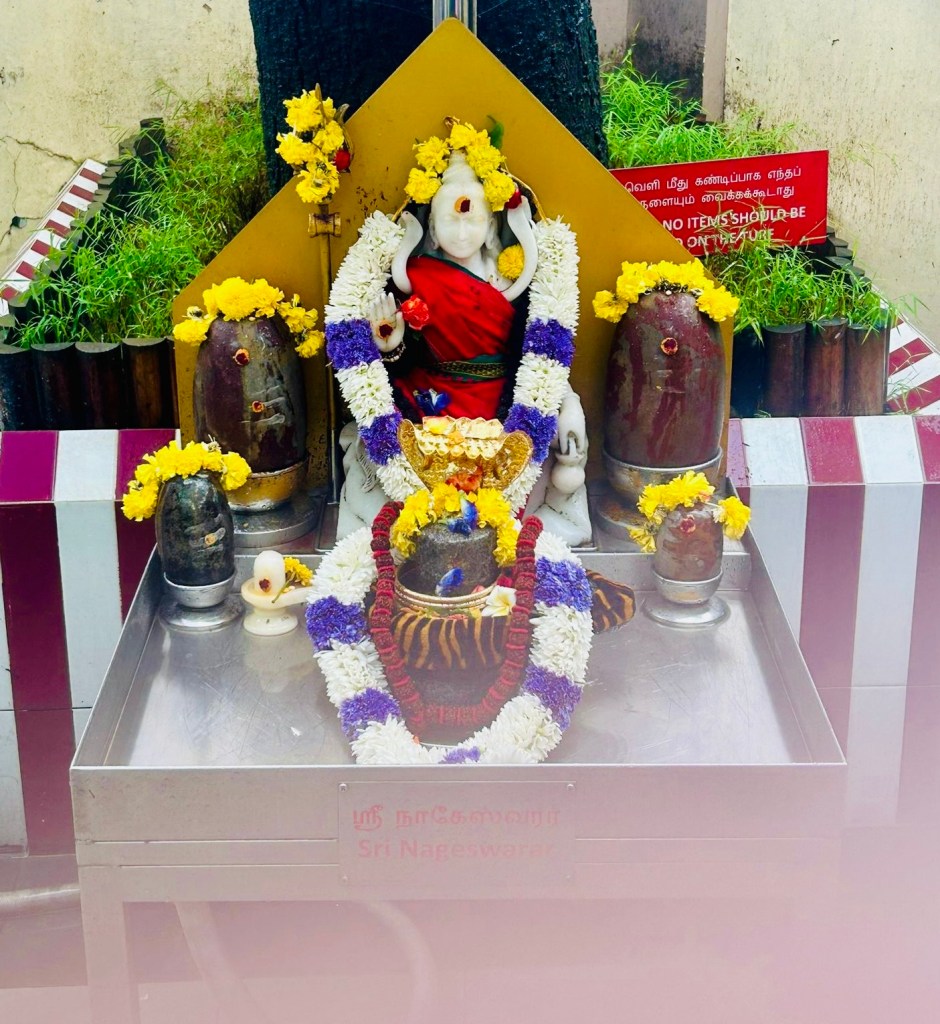
Energetic Qualities and the Storm Element
Banalingams are renowned for their powerful energetic resonance. While traditionally associated with all elements and chakras, some contemporary healers and spiritual practitioners describe the energetic effect of the Banalingam as resonating with the Storm element.
The Storm element is symbolic of dynamic transformation, powerful energetic movement, and the union of opposing forces-much like a storm brings together wind, water, and lightning in a display of nature’s raw power. Storms are forces of nature that break stagnation, electrify the atmosphere, and catalyse new growth. They are unpredictable, intense, and cleansing. The Storm element is associated with sudden insight, awakening, and the rapid movement of energy through all levels of being.
The energies within the Banalingam are not gentle or passive. Instead, they are active, potent, and catalytic. In the context of Banalingam, the Storm element refers to the stone’s capacity to catalyse profound change, awaken dormant energies, and realign the subtle body. To harness the Storm element energy of a Banalingam, one might meditate with the stone during times of transition, when feeling stuck, or when seeking a breakthrough.
A Deeper Relationship with Lord Shiva

For readers captivated by stories of Hindu mythology and Shaivite spirituality, my novel The Heart of Shiva offers a lyrical and compassionate journey into the mysteries of faith, rebirth, and enlightenment. Centred on Priestess Tara–whose unwavering devotion to Lord Shiva is both her strength and her solace–the novel explores the journey of the soul from one incarnation to the next.
Through prose, poetry, and myth, I bring to life the rich tapestry of Hindu-Buddhist traditions, weaving together themes of motherhood, reincarnation, and the search for the True Self. Within these pages, readers will find not just a meditation on the cycles of rebirth, but also an invitation to reflect on their own past and future lives.
The Heart of Shiva is a call to introspection, urging us to confront our vulnerabilities and embrace the divine essence within. Available at all major online bookstores and at Singapore’s National Library Board (NLB) libraries, this novel is a compelling read for anyone seeking a fresh perspective on the priesthood, the Divine Feminine, and the eternal and enduring quest for enlightenment.




 Twinn Swan
Leave a reply to The Hindu Consecration of Sacred Objects | The Ritual of Pran Prathistha – the mercantile. Cancel reply