
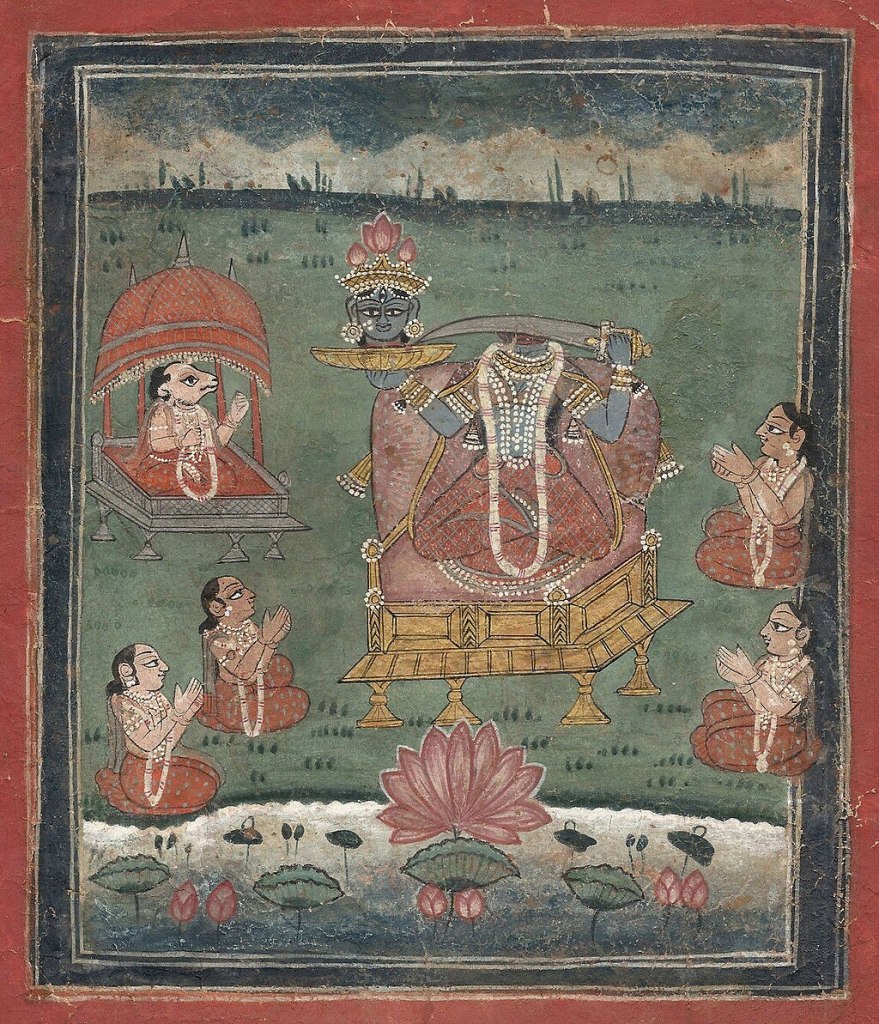
Goddess Kali, in her fierce and paradoxical form as Chinnamasta, stands as one of Hinduism’s most enigmatic and profound symbols. Though her image may appear, on the surface, to be undeniably violent–depicted as she holds her own severed head, with streams of blood gushing forth–Chinnamasta is not a goddess of death, but of life and spiritual nourishment.
Despite the apparent violence of her self-decapitation, Chinnamasta is very much alive. The blood that flows from her neck is not a symbol of loss or depletion, but of life itself–the prana vital force, that sustains the universe. The continuous flow of blood represents the ongoing cycle of nourishment and the interconnectedness of all beings.
On a deeper level, the blood in Chinnamasta’s iconography symbolises the innate capacity of certain souls to be nourished and empowered by change, rather than upended by it. The image reassures devotees that within the chaos and upheaval lies the potential for profound growth and renewal. The streams of blood are a testament to the goddess’ role as a source of sustenance, even amid apparent destruction.

Spiritual Power and Healing
Chinnamasta is a goddess of paradoxes. Her act of self-decapitation is not one of self-destruction, but of self-transcendence–symbolising the cutting away of the ego and the realisation of higher consciousness. In Tantric traditions, this act represents the abolition of ignorance and the merging with the unity of existence, inviting devotees to rise above the limitations of the physical body and the illusions of self.
Chinnamasta’s energy is a catalyst for radical transformation. She initiates practitioners into the use of their own spiritual power to heal and renew themselves. Through rituals such as Chinnamasta Japa (repetitive chanting of her mantras), devotees report overcoming self-doubt, healing emotional wounds, and gaining clarity of purpose. Her fierce presence encourages spiritual courage, resilience, and the ability to embrace change as a source of nourishment and empowerment.
The three streams of blood flowing from Chinnamasta’s neck are rich in symbolism. They represent the triple goddess archetype-creation, preservation, and destruction-and are sometimes associated with the three primary energy channels (nadis) in the body: Ida, Pingala, and Sushumna. This connection underscores her role in balancing and harmonising the cosmic forces within and without, guiding practitioners toward spiritual enlightenment.
Gaining from Severance
Chinnamasta’s image is a profound reassurance that, at the deepest level, chaos and upheaval are not destructive. For those initiated into her mysteries, these forces are sources of nourishment, strength, and renewal. By embracing her wisdom, devotees learn to draw sustenance from change, to transcend the ego, and to align with the cosmic rhythm of life, death, and rebirth.
In the fierce and compassionate embrace of Chinnamasta, the soul discovers its capacity not just to survive the change, but to be nourished and transformed by it.


 Twinn Swan
Leave a reply to Spanda and Stasis | Why Men Resist Women’s Growth – the mercantile. Cancel reply