
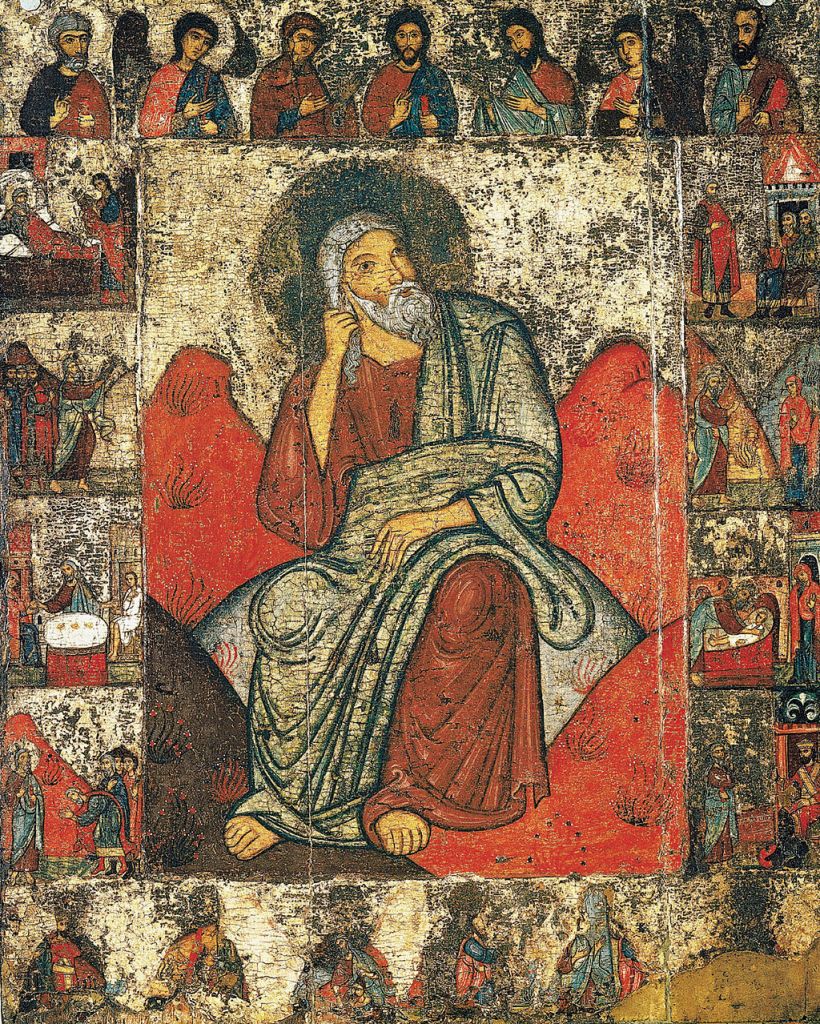
The wind whipped sand across Elijah’s face as he made his way through the bustling marketplace. Silk merchants hawked vibrant fabrics, farmers bartered for livestock and the air buzzed with the clinking of coins. Yet, beneath the surface, a hollowness remained. The populace spent their time chasing fleeting pleasures, their eyes locked on the next shiny trinket, their hearts devoid of a deeper purpose for their fleeting existence.
King Ahab, a charismatic leader, championed grand building projects, lavish feasts and alliances with powerful nations. But in his relentless pursuit of wealth and prestige, he neglected the values that had once bound the Israelites: compassion, community and a connection to the Divine.
One dust-filled evening, Elijah found himself before Ahab. The king, adorned with opulent jewelry, reclined on a plush divan. “Ahab,” Elijah boomed, his voice echoing in the cavernous hall, “you chase fleeting pleasures, neglecting the true wellspring that sustains us all.” In response, Ahab scoffed and ordered, “Speak plainly, prophet.”
“The glittering promises of wealth and power,” Elijah declared, “they leave you parched for something true and lasting. You have turned your back on the source, the Divine spark that gives purpose to our lives.”
“What Divine spark?” King Ahab answered. “Our prosperity is a testament to our own strength!”
Elijah sighed. “Prosperity isn’t everything, Ahab. Without a connection to something greater, your kingdom will be a desert – fertile on the surface, but barren within.” Ahab dismissed him with a wave of his hand. “Go on with your pronouncements, prophet. But know this, I answer only to myself.”

As he left the palace, Elijah felt a heavy burden settle on his shoulders. He knew a storm was brewing, not of rain, but of disillusionment and despair. He retreated to a hidden valley, where a small stream still flowed, a symbol of resilience amidst the drought gripping the land. There, ravens brought him meagre meals, a reminder that even in isolation, the Divine provided.
One day, a widow stumbled into his hermitage existence. Her village was on the brink of starvation. “The crops have withered,” she cried, “the wells have run dry. We’ve lost sight of the path and forgotten the stories which one sustained us.”
Elijah felt a flicker of hope. “True abundance doesn’t come from material wealth alone,” Elijah answered. “It comes from remembering who we are, a community bound by shared values and faith in the Divine.”
“The Divine… you mean that spark within?”
Elijah smiled. “Yes, the spark that guides us towards compassion, justice and the love of our land.”
Together, they returned to Zarephath. Elijah didn’t preach fire and brimstone, but spoke of forgotten stories, of acts of kindness, and the importance of sharing their limited resources. Slowly, a shift occurred. Villagers remembered the forgotten values, the wellspring of their strength. They pooled their remaining seeds, tilled the parched earth with renewed purpose, and nurtured a shared garden.
News of their actions spread. People began questioning the hollow pursuits they’d been chasing. Communities rediscovered their shared values and a spirit of cooperation bloomed. When the rains finally came, they were met with joyous tears, not just for the replenished fields, but for the rediscovery of the true source of their abundance.
Ahab, witnessing the transformation, finally understood Elijah’s message. He reached out, seeking guidance, not to build a grander palace, but to heal the cracks in his kingdom’s foundation. Together, they rebuilt not just infrastructure, but the hearts of their people.
The drought–a metaphor for the spiritual barrenness–finally ended. The land flourished, not just with crops, but with a renewed sense of purpose and a connection to the Divine. Elijah, the solitary prophet, became a guide, showing them that true abundance lay not in external things, but in tending the spark within themselves and their communities.

The Raven
Imagine Elijah, alone by the brook, when a commotion shatters the stillness. A flock of glossy black ravens, their wings flashing in the sunlight, descend upon him. Bread and meat dangle precariously in their sharp beaks, a sight both unsettling and strangely reassuring. These weren’t mere scavengers. God had sent them, a stark reminder that even in the wilderness, He provides for his people.
I have commanded the ravens to feed you there.
1 Kings 17:4
Elijah, a prophet of God, found himself dependent on the offerings of ravens for sustenance. This stark contrast between his divinely chosen role and his reliance on birds that are primarily scavengers served as a powerful lesson in humility. Even the most significant figures can find themselves in need and God uses even the most seemingly insignificant to provide.
The ravens don’t bring a single, large provision. They arrive with smaller offerings symbolising the divine flow of blessings. This reminds us that blessings often come in unexpected ways and require continuous trust in the divine plan. Each arrival of the ravens is a reminder of Elijah’s dependence on a higher power and the constant flow of grace that sustains him.
Elijah could not command the ravens, but he had to trust in their mysterious deliveries. It became a trial by faith. The ravens, ordinarily associated with death, symbolised a tangible embodiment of his inner demons where he confronted his empty doubts and anxieties. By allowing himself to depend on a higher power even for his basic needs, Elijah wasn’t just weathering a physical hardship; he was undergoing a spiritual transformation.
The ravens brought him bread and meat in the morning and bread and meat in the evening, and he would drink from the brook. It happened after a while that the brook dried up, because there was no rain in the land.
1 Kings 17:6-7
Humility is a recurring theme throughout the Bible. Even prominent figures like Elijah and Moses experience moments of humility, reminding us that true strength comes from acknowledging the uncertainties and anxieties we all encounter. By confronting them and trusting in a higher power, we can all find, within us, inner strength and a renewed sense of purpose.
Struggle for Survival
In Eden, humans lived in harmony with nature, with relatively easy access to sustenance. The expulsion from the garden symbolises the start of a warped and twisted relationship with nature. The ravens, scavengers rather than providers, embody this brokenness. Their reliance on scraps reflects the consequences of human actions and the struggle for survival in a world that is no longer abundant.
The serpent in Eden tempted Adam and Eve with knowledge and power. The ravens, though not tempting Elijah, present a different kind of test. Can he accept help from creatures ordinarily associated with impurity? Elijah’s willingness to receive and to accept the unexpected becomes a test of his faith and whether he has the ability to see the divine working even in unexpected forms.
Just as the Tree of Knowledge of Good and Evil presented a choice between two seemingly opposing options, the ravens challenge the idea of clear-cut categories. They are both providers and scavengers, associated with death and sustenance. This ambiguity reflects the complexity of the world after the Fall, where good and evil are often intertwined.
The divine can work through unexpected channels and blessings can come disguised as challenges. After the Fall, humans gained knowledge of good and evil, but also developed the capacity for sin. The ravens, through their association with both death and provision, can be seen as a reflection of humanity’s own inherent duality. We all carry the capacity for both good and bad within us. This interpretation suggests that by accepting the ravens’ help, with all their contradictions, is a way for Elijah (and by extension, us) to embrace the shadow sides of our own complex nature.
The Fall is often interpreted as a loss of innocence. Many, however, view it as a necessary step towards maturity and spiritual growth. The ravens, through their unexpected role as providers, represent the possibility of finding sustenance and guidance in unexpected places. This encourages openness and a willingness to see the divine working in ways that challenge our preconceived notions.
By delving into the “beyond duality” aspect, the ravens become a symbol of the ongoing struggle for sustenance after the Fall. They challenge us to move beyond simplistic categories, embrace the complexity of existence, and find new opportunities for growth amidst the ambiguity of the world.


 Twinn Swan
Leave a reply to The Root Cause of Illness and Disease | From Spiritual to Scientific Causes – The Mercantile Cancel reply