
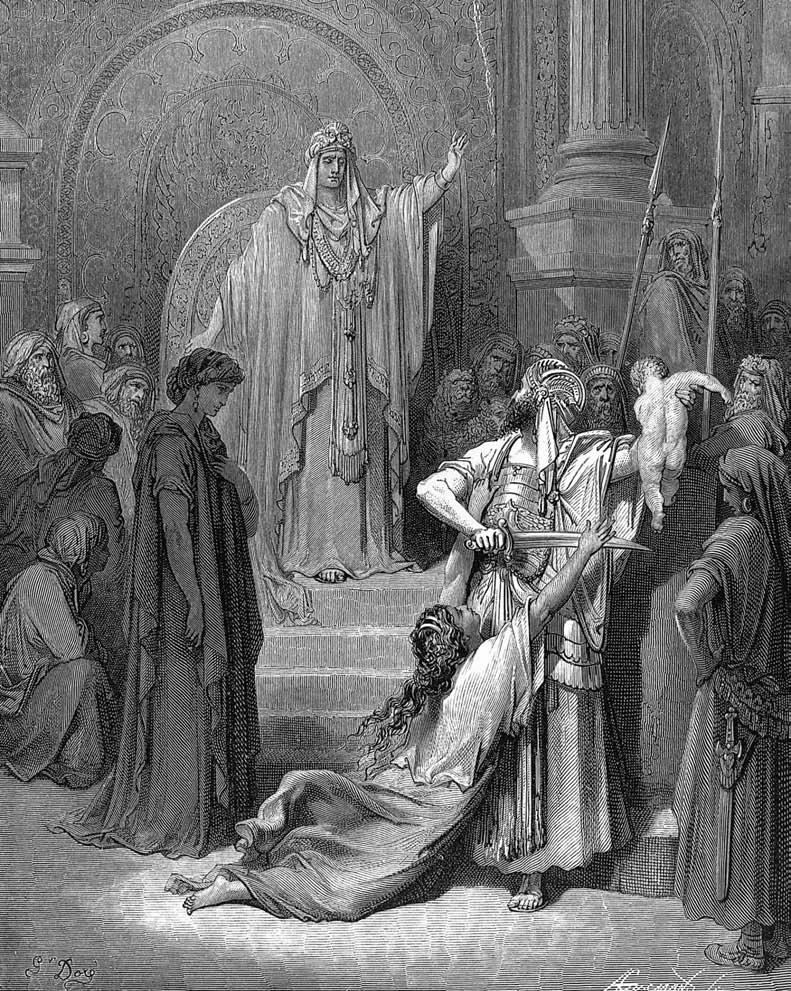
Sweat beaded on Solomon’s brow as the two women shrieked accusations at one another. Both claimed to be the mother of the wailing child; their stories intricately woven with details that were both believable yet contradictory. Ignoring their pleas, Solomon calmly called for a sword.
A gasp rippled through the court as the sword’s blade approached the child, but the king’s gaze remained fixed on the women. Just as the blade glinted in the sunlight, a choked sob escaped one woman. “Please, no! Take me, but spare the child!” In that trembling voice, Solomon recognised a mother’s love; an irrefutable truth no argument or claim could ever hope to deny.

Wisdom and Justice
King Solomon’s reputation for wisdom and justice is renowned. The source of Solomon’s wisdom is two-fold. Time and time again, the biblical narrative reminds us of the importance of both divine favour and human effort. While it was undoubtedly a gift from God, it also stemmed from his exceptional power of observation and discernment. Solomon had honed his wisdom, not only through the diligent study of Torah, but also vis-a-vis his observations of the world around him.
Solomon’s judgment, as it pertains to the two ‘mothers’, was never about ‘splitting’ the baby between them. He knew, even before he picked up the sword, that he would recognise the birth mother through her instinctual emotional response. Solomon knew how to see beyond the quarrels and arguments on the surface. He was able, not only to ask the right questions, but also take action in order to gleam a deeper insight into a delicate matter.
Solomon knew that the birth mother would be willing to sacrifice her own claim on the child to ensure the infant’s safety. Truth was something Solomon discerned through keen observation of human behaviour. He did not rely solely on the claims which the two women were making.
Solomon’s discernment is a reflection of God’s ability to reveal the truth at the heart of the matter. While the two mothers were presenting their arguments, Solomon was not only listening not just to the content, but also to the underlying emotions and intentions. This deeper level of listening would have helped him identify potential biases and hidden agendas.
Instead of allowing himself to get caught up and drawn into their arguments, Solomon devised a creative test which exposed the truth. This approach bypassed their arguments altogether to focus on uncovering which ‘mother’ possessed, within her heart, the genuine maternal bond.
Thus King Solomon excelled all the kings of the earth in riches and in wisdom. And all the kings of the earth sought the presence of Solomon to hear his wisdom, which God had put into his mind.
2 Chronicles 9:22-23
Solomon was, indeed, skilled at seeing beyond the surface. These questions could have exposed inconsistencies or prompted additional details that revealed the truth. The truth is: people often present arguments with unspoken biases or assumptions. Solomon might have been adept at identifying these and challenging them, thereby forcing an objective examination of the situation at hand.
Solomon, unlike other judges who came before him, wasn’t fooled by outward appearances or eloquent pleas. He possessed a deep understanding of human nature, allowing him to see through facades, arrive at the truth and respond accordingly.
Economic Boom
The economic boom which took place under King Solomon’s leadership did not occur only due to good luck. Rather, it was a testament to his wisdom and foresight in decision-making. As a keen and astute diplomat, the alliances that Solomon made were not only political maneuverers.
His wisdom allowed him to build genuine trust with leaders like Hiram, the Phoenician King of Tyre. Solomon was successful in fostering a spirit of cooperation that benefited both kingdoms economically. Solomon’s focus on trust and mutual benefit went beyond short-term gain, ensuring long-term stability for trade.
When it came to infrastructure projects, King Solomon’s projects sought to address specific economic needs. His wisdom allowed him to identify bottlenecks in trade routes and resource transportation, leading to strategic investments in ports, roads and water systems. This targeted approach maximised the economic impact of these projects.
While the biblical narrative does acknowledge the discontent that arose later in Solomon’s reign due to high taxes, it is held that Solomon initially implemented a fair and transparent tax system. He understood the kingdom’s carrying capacity and ensured that taxes were used for projects that demonstrably benefited all citizens and not just the elite. This initial fairness might have fostered a sense of shared purpose and contributed to the economic boom.
Ethics
Furthermore, Solomon placed a considerable emphasis on ethical conduct in commerce. King Solomon established regulations and a legal system which discouraged fraudulent practises in order to ensure fair trade. This fostered a climate of trust amongst merchants and consumers, promoting the health of the economy.
The building projects and infrastructure development that King Solomon undertook required both skilled and unskilled labour. Solomon, recognising the diverse needs of his economy, invested in education and training programs. This not only ensured a skilled workforce for his projects, but also created a generation of artisans and engineers who could contribute to the kingdom’s long-term economic growth.
Solomon’s wisdom wasn’t held together by a single thread. Instead, it was a tapestry interwoven with various skills. His ability to build trust, identify economic needs, implement fair policies, promote ethical trade and invest in human capital all contributed to the economic prosperity of his reign.
This period, often referred to as The Golden Age, serves as a testament to the power of wise leadership in creating an economic boom.
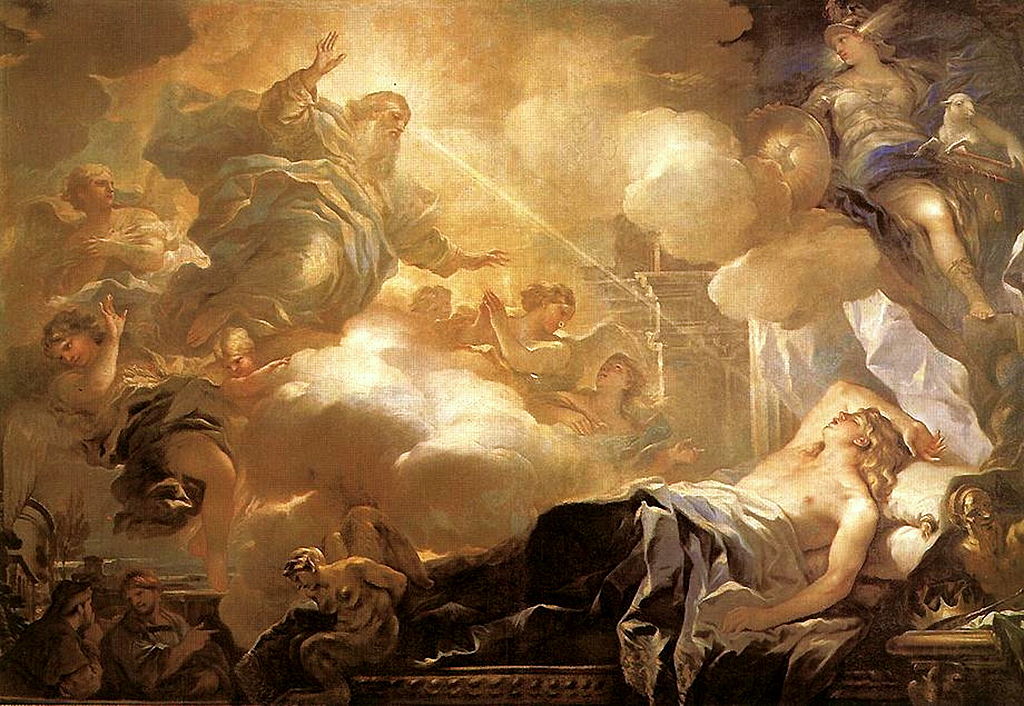
God answered Solomon, “Because this was in your heart, and you have not asked for possessions, wealth, honour, or the life of those who hate you, and have not even asked for long life, but have asked for wisdom and knowledge for yourself that you may govern my people over whom I have made you king…”
2 Chronicles 1:11
The Scales
While King Solomon’s reign is often remembered for its sense of justice and economic prosperity, there were potential downsides to his policies that had a long-term impact on the kingdom.
The Bible does mention a growing level of discontent with higher taxes later in Solomon’s reign. It can be deduced that these taxes were likely used to fund lavish building projects and an unnecessarily opulent lifestyle. The financial burden this undoubtedly placed on the common man would have bred resentment due to the underlying inequality that had taken root within the system. Large-scale structural problems such as these are difficult and time-consuming to uproot.
The scale of these projects suggests the use of a large workforce which may have included forced labour. Due to this, there may well have been elements of exploitation and social unrest. Perhaps Solomon’s later economic policies prioritised a luxurious lifestyle over the essentials of good governance. This focus on outward appearances could have created an unsustainable economic bubble that was sure to come crashing down.
A wealthy elite benefiting from the boom while the common people bore the brunt of the costs could have created significant social tensions. The festering resentment towards high taxes and social inequities could have contributed to the split of the kingdom after Solomon’s death. The northern tribes might have felt neglected and burdened by the economic policies that primarily benefited the south.
It is important to acknowledge that the exact scale and nature of the economic boom are not accurately known. Nevertheless, the overall conclusion that can be reached is that while Solomon’s initial economic policies were wise–for they focused on fair taxes and infrastructure projects–his later focus on luxury and high taxes raises questions about the long-term viability the economic miracle.
King Solomon’s economic policies offer a complex case study. While they led to an initial period of prosperity, the potential exploitation, focus on luxury and the over dependence on foreign trade may have planted the seeds for future instability and ultimately contributed to the kingdom’s division.
If you see in a province the oppression of the poor and the violation of justice and righteousness, do not be amazed at the matter, for the high official is watched by a higher, and there are yet higher ones over them.
Ecclesiastes 5:8
The Golden Age
King Solomon’s reign, often romanticised as a golden age, stands as a multifaceted biblical case study of ancient economics. While strategic alliances, infrastructure development and trade promotion fuelled an initial boom, the potential for exploitation, a focus on luxury and an over dependence on external forces raises many issues regarding its long-term prospects.
Did unforeseen circumstances or an overemphasis on a luxury lifestyle contribute to the kingdom’s later struggles? Solomon’s economic legacy serves as a powerful reminder. True economic prosperity requires a delicate balance between promoting growth, ensuring social welfare and fostering long-term sustainability. It’s a lesson that continues to resonate with leaders navigating the complexities of economic development today.





 Twinn Swan
Leave a reply to The Challenges of Wealth – The Mercantile Cancel reply