
The 2019 Estonian film Truth and Justice follows the story of Andres as he creates what he thought would be the life of his dreams on Robber’s Hill. The movie takes place in the sparse provincial setting of a farm. All Andres thinks he needs is a healthy harvest, cooperative neighbours and a son.
Ahh… If it were all truly so simple, then, we storytellers would have absolutely nothing to write about.
The film Truth and Justice is an adaptation of the first volume of the 1926–1933 social epic pentalogy of the same name by Estonian author A. H. Tammsaare. Since Tammsaare was interested in philosophy and psychology, his novels reflect the ideas of Bergson, Jung and Freud. The film adaptation of Tammsaare’s novel was selected as the Estonian entry for the Best International Feature Film at the 92nd Academy Awards.
The premise of the story is simple enough. What has been done brilliantly by director Tanel Toon is the execution. The story begins with a typical and traditional rural farming family that has to work in order to till the land to make ends meet. The soon-to-be patriarch of the family, who is still a small timer, has big dreams of vast wealth.
Interestingly, but not unsurprisingly, neither peace nor happiness are factored into that equation. And as time goes on, it becomes abundantly clear that while the family’s wealth goals will eventually be reached, it will come at a cost to their personal lives and relationships. Bit by bit, Andres’ family begins to fall apart.

The story first begins to unfold and unravel due to the conflict between Andres and Pearu. The next door neighbour Pearu is a crook. He repeatedly resorts to trickery and underhandedness to get what he wants. In the early days of the conflict, Pearu is the instigator of the conflict and he wins. He wins again and again. He wins because in the early days Andres is hell-bent on working himself–and even his pregnant wife–to the bone doing what he thinks is right.
But the day comes, when Andres, who is so tired of losing; decides to take an opportunity that showed up on his doorstep to transform a losing streak into a winning streak. He realises that in a world where no one would give him justice, he would have to create it for himself.
This turning point is significant, because from that moment on, Andres takes justice into his own hands. He stops seeking it from other people. Through that process, he begins to enact numerous injustices on the people around him. First, he voices his unhappiness that his wife had three daughters. When a son finally arrives, his wife, who is a sweet and kind lady, passes away.

Bit by bit, whatever humanity once resided in Andres begins to harden and to fade. He loses his ability to feel compassion for anyone and that includes his own family. He alienates everyone that was once close to him due to his workaholism and his complete lack of interest in anything or anyone except his work. His work had become such a strong compulsion that he no longer had a heart for his family.
At the very end, you do see Andres cry bitterly. As a viewer, you are both happy for his achievements–which you know are hard won–but you are also left wondering: did he lose something that was actually more valuable in the process? After all, he has become estranged from his children due to his callousness and his cruelty and all he has to show for his life are his financial achievements.
Your father treats you as he does because he is no longer the man he used to be. He didn’t fear any damned soul and would have let his child marry the devil himself… Pearu may be bad, but now your father is even worse.
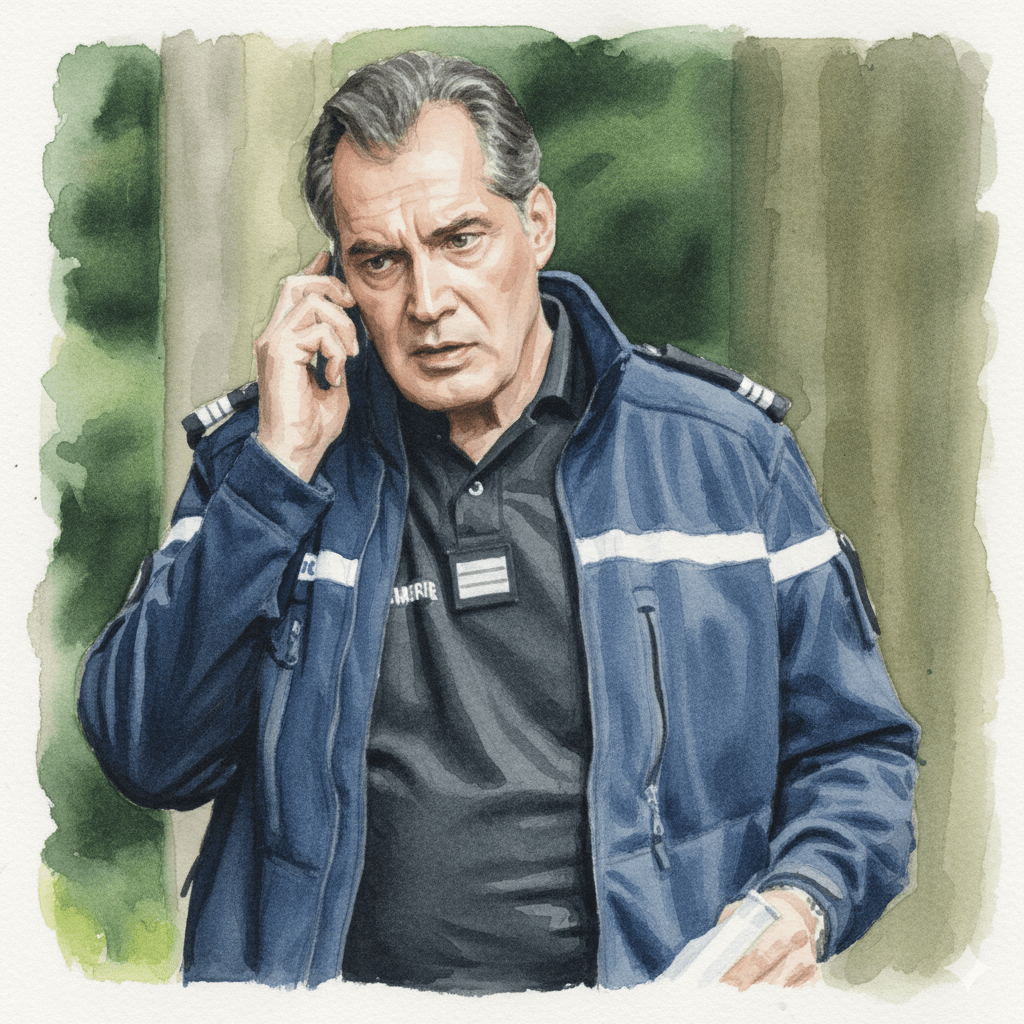
Tanel Toom’s Truth and Justice (2019)
We usually think of conflict and cruelty as something that gets passed down through the generations. But sometimes, even the one who is the rightful heir to the family fortune doesn’t want to be part of the ongoing conflict. Perhaps when a conflict becomes deep and entrenched, it doesn’t matter who was right and who was wrong. It doesn’t matter who provoked the fight and who won the fight. The next generation simply does not want to be a part of it. They are miserable and they want out.
In the end, Andres realises that despite the legacy that he painstakingly achieved, he has no one to pass it down to. Why? The reason is simple, there is no one in the next generation that is willing to take up the mantle of the hard-hearted patriarch.
There is something about the film that kept me watching. There was a sparse quality to the film that I find hard to put into words. It is long, slow and definitely not a movie that you watch for the fast-paced action. But as I watched it, it made me stop… and it made me think.
It made me realise that when a man has completely lost his way, he sometimes can no longer find his way home; for such a place no longer exists.



 Twinn Swan
Leave a reply to The Emperor Archetype | The Powerful Man – The Mercantile Cancel reply