
Bless me, O Lord, with a son. In all religious traditions around the world, prayers are recited by fathers and mothers before the conception of a child. What do these soon-to-be parents always want? A son.
In today’s modern and urban society, a child of either gender is usually welcome. We no longer have a bias against having daughters. But this bias and this preference for sons did exist for a large part of human history. It is, for the most part, a patriarchal practise which many women have willingly participated in. They, too, wanted sons.
Toxic masculinity has become a buzzword for my generation. As gender roles changed, reversed–or in some cases, stayed the same–we have to contend with the very real fact that what was once the norm is now an outdated bias and prejudice; and that what was once held up as ‘the ideal’ is now in a dire state of deterioration and degeneration.
It is the small man within who thinks that he is the big man. It is the small man–the ego–who thinks he can call all the shots and do as he pleases. In the modern context, we no longer respect men who behave as the old patriarch did. It is slowly becoming a social taboo, even in more traditional societies. We don’t want patriarchy. Down with hierarchy and oppression. We want egalitarianism. We want equality. In a world of equality, hierarchy must cease to be. The child is now equal to the parent. The wife is now equal to the husband. The boss is now equal to his or her employee.
Everyone has a picture or a portrait of himself as his chosen ideal. Egalitarianism may be the ideal for some. For others, it may be authority and a clear system and structure. Any purely intellectual concept is always valid for it can always be justified. This ideal remains only a mental image and is not actually lived out. The gulf between the ideal and the actuality is what leads us to create the illusions in which we remain ensnared.
Have we–in all of human history–ever managed to create a truly equal world? According to The Bhagavad Gita, as long as the lower nature of one’s mind remains an unconquered enemy, one has no choice but to serve the lower desires of lust, anger, revenge, greed, gluttony and so on. The one who cannot restrain–or even retrain–these desires lives always with the greatest enemy he has ever known: himself.

O Lord, the father cried, you have blessed me with a son and cursed me with all the problems of raising him. Ah yes, the prayer that was sent up to the Lord was answered… But now the father realises that he has to raise the child that he prayed and asked for. Above all, the father realises that his son is absolutely nothing like him. Not only does he not share his father’s values, he doesn’t understand his father at all.
A few years back, I was in the midst of doing an in-depth study of past lives. As part of this process, I dived into studying the one topic that I once had a tremendous interest in. History. This took me down a rabbit hole of studying tribal societies, ancient civilisations and… most importantly, religious institutions.
There is no heart in my son, there is only his mind. This is how the father describes the son that he not only prayed for but also received. The father is very disappointed and dismayed with his son. He did not receive what he expected. For every prayer that is granted, I do think that many go unanswered. It is ultimately God that knows what is best for us. The father is in a state of lamentation for he has realised that despite the splendid mind and memory that his son has, the boy just hasn’t a soul. He cannot feel for others. He is self-centred and has no empathy.
When I was in secondary school studying genetics and biology, the whole idea of genetic inheritance fascinated me. Albeit, only temporarily. It seems that men inherit–as in receive–more genetic material from their mothers than their fathers. It is why a male child is more likely to be like his mother than his father. Again, we are speaking of probabilities and likelihoods here and not actualities.
Is choosing to have children a gamble? Do we ever know what kind of child we are going to have and what is going to happen to them in the future? Choosing to have a child is a lifelong commitment. The scene–or should I say the photograph and the portrait–is one that we know. It is a picture of a couple and their two loving children. There is a family home and all is happy and joyous. These bonds of familial love even extend to others in the community.
But this is not always the ideal either. For many, the small self is all that matters. He is, for all intents and purposes, his own little god. I have experienced this firsthand in a westernised society such as Australia where I lived for five years. Many couples choose not to marry. Moving in–as opposed to marriage–is the mark of a commitment. A couple that has lived together for more than two years are considered to be in a de facto relationship.
Sometimes, even though we have wished and prayed for a beautiful and harmonious relationship, the reality can be quite different. One may feel disconnected and disengaged. Something is either not right or it is missing altogether. The home life is unhappy, broken and dysfunctional. There is no chosen ideal at all to aspire to, let alone live up to. It is each man for his or herself.
In the mental spheres of our emotions and feelings, we are tantalised by our own preferences, our societal conditioning, our likes and dislikes, our loves and hatreds and our appetites and passions. We are all trying to live up to a mental ideal that we may never be able to create, let alone sustain.
O Lord, it is a soul that my son needs. Integrity, charity, strength to suffer and bear his pain. That is what I want from my son. Not a mind without a soul, without a heart. I recognise the father-son dynamic in the father’s lamentation. I recognise–in the young man that the father is describing–someone that I once knew. It is the son who is a disappointment to his father. He is a young man who has failed to live up to the expectations of those around him. He has lived a selfish existence only for himself. I have known many men who are like that, regardless of whether they’ve had families or not. They are not only selfish, they are also heartless.
But of course, many of these stories, these lamentations and these prayers are from a different era. These days, work comes first and family comes second. In our modern society, many adolescent young men do not live, let alone grow up with their fathers. Given the reality of absent parents who leave their kids at daycare or with domestic helpers, how can we meet the needs of young people who either do not have fathers or who are estranged from their fathers?
Studies have generally found that risk-taking is higher in men than in women. During adolescence, males are known to risk their lives by indulging in what we call ‘juvenile behaviour’. This includes but is not limited to: driving too fast, drinking excessive amounts of alcohol, getting into fights and so on. Does this stem from an innate desire to be initiated into manhood and all that it entails?
In tribal societies, to be deemed worthy of manhood and masculinity, a test and a trial was necessary. You also had to successfully pass the test. It required undergoing temporary pain in order to gain something worthwhile at the very end or in the future. It is how the male proved himself to be a ‘worthy’ member of his community. The male had to successfully meet certain expectations to earn the respect of the people in his community. If he didn’t pass the test, he lost all respect. He would be shunned by the members of his community and he would have to make a comeback.
But would he be able to? It depends. It depends on whether he wants to put in the time and the effort. It depends on whether or not he can understand where he went wrong and the steps that he must take to either rectify or remedy it. If he fails to earn the respect of those around him, the likelihood that there will be any redemption of his social standing in his community is close to nil.
The Self is the friend of the self for him who has conquered himself by the Self, but to the unconquered self, the Self stands in the position of an enemy like the (external) foe.
Bhagawad-Geeta by Swami Chinmayananda
If old wounds from generations past are resurfacing in your mind in order to be healed, be gentle with yourself. Sometimes the key to our intuition and to successful leadership is our emotional resilience. We must understand and accept that things that we cannot change may simply not be for us at that particular moment.
Perhaps God has something even better and more fulfilling in store for the future that we simply cannot foresee. Sometimes we just need to listen to the gentle nudge of our magnificent heart to guide and lead us to where we have truly incarnated to go.
The purpose of meditation is to bring one’s mind and one’s emotions under control. When the mind is finally conquered, one is free to pursue higher desires. Activities of the world–no matter how well-meaning they are–will no doubt leave a trace and a sense of disillusionment. In some serious cases, it can even lead to painful wounds in terms of economic loss, mental anguish and painful restlessness. Is there more to life than this? Why isn’t my son who I thought he would be?
In order to mitigate the reactions of our actions–karma-phala: the fruits of our actions–we have to aspire to a healthy and well-ventilated inner life. The way of the renunciation of the ego is to surrender. We surrender our sense of agency in the activities we participate in. We also need to surrender the anxieties that arise due to our attachment to the fruits of our actions.
If we can embrace this way of being, we can finally accept our losses and release ourselves from the mental and spiritual bondage that shackle us during our short sojourn on earth. This is the process through which we can finally give up all our known weaknesses and blossom into a healthier and more potent life of virtue and strength.
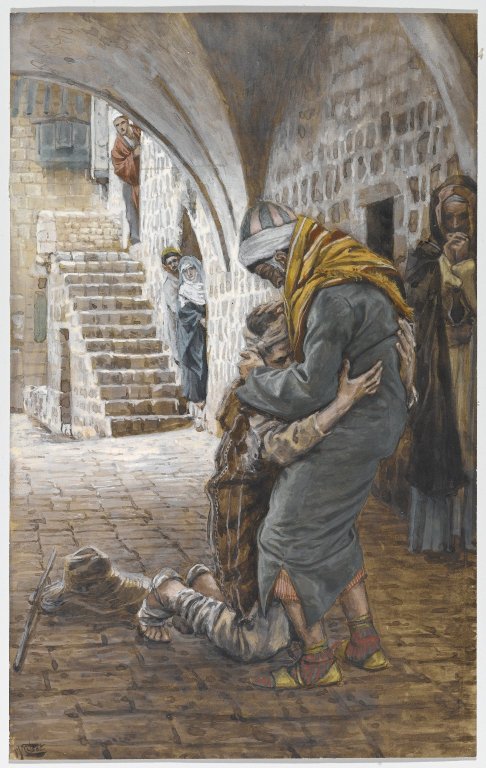
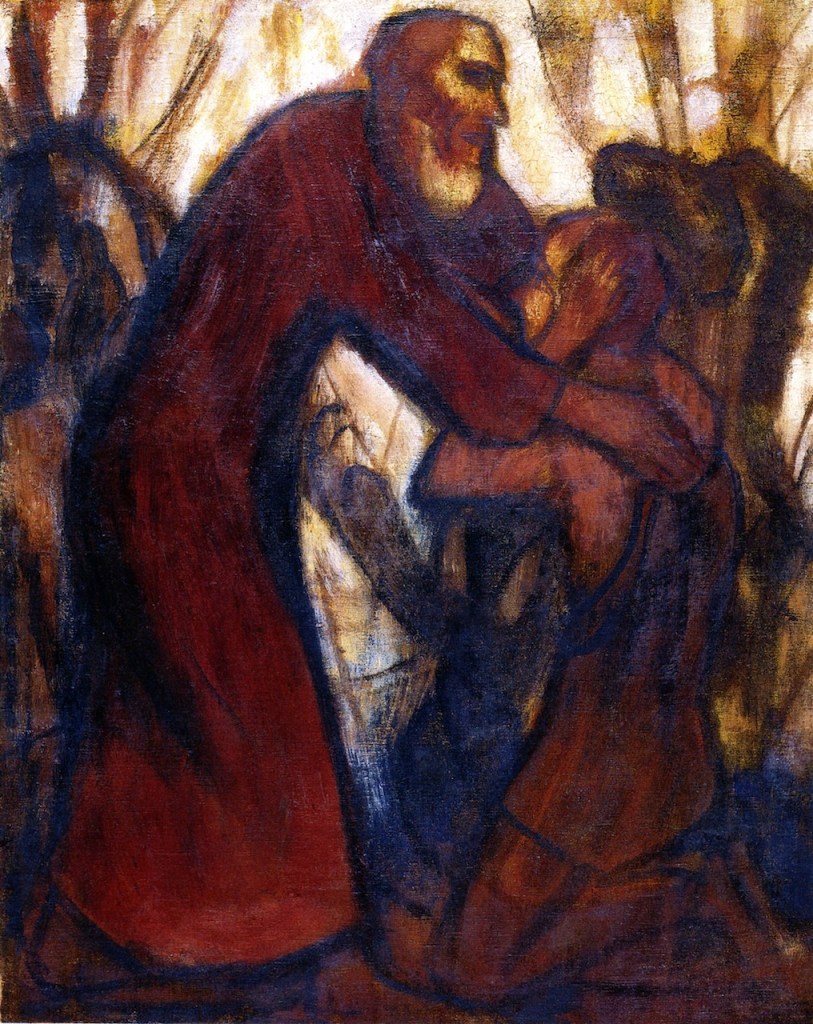
For this son of mine was dead and is alive again; he was lost and is found.’ So they began to celebrate.
Luke 15:24
If I could rewrite the father’s letter of lament to God, I would choose to tell a different story. What would the father’s life look like if he assumed that God was working in his favour, instead of against him?
Dear God,
Thank you for providing me with the son I asked for. I now face a new challenge. I will have to learn how to raise him with the values that I hold dear. He is still young and there is so much that he still has to go through. Is there a heart in my son? If so, he does not reveal it to me. I pray that he will learn to lead with his heart instead of his mind. Although I am his father, there is much that I do not know about my son. Please help me to shift my perspective so that I may be a better father.
Amen.


 Twinn Swan
Leave a reply to Fractured Inheritance | The Uncertain Future of Tribal Identity in a Changing World – The Mercantile Cancel reply