
In Ancient Egypt, the creatures that were most feared were the ones that were able to cause pain. While many animals were feared–from crocodiles to hippos–there were two creatures that were singled out as having the potential to cause the most harm and the most pain.
These two animals were: the snake and the scorpion. While all scorpions are indeed venomous, their venom varies greatly in potency depending on the species.
A medical condition known as scorpionism is an injury caused by the stinger of scorpion. The damage caused depends on the particular species that we’re dealing with. Most scorpion stings range in severity from minor swelling to medically significant lesions. Only a few able to cause severe allergic, neurotic or necrotic reactions.
When surprised or threatened, a scorpion uses its stinger to inject you with its venom. People sometimes call this event a scorpion bite–but it’s a sting–not a bite. Depending on the type of scorpion, the venom can cause pain or, much more rarely, affect your nervous system and cause other serious health problems.

Toxicology
The term toxin is used to describe toxic substances produced naturally. A toxin is any poisonous substance of microbial (bacteria or other tiny plants or animals), vegetable, or synthetic chemical origin that reacts with specific cellular components to kill cells, alter growth or development or even kill the organism.
Some have referred to the scientific discipline of toxicology as the “Science of Safety”. The discipline has evolved from a focus on studying poisons and the adverse effects of chemical exposures to a field that focuses on studying safety.
Toxicology helps us to understand the harmful effects that chemicals, substances and situations can have on people, animals and the environment. This science was born to deal with the safe use of chemicals; which when administered incorrectly can cause more pain and danger than the illnesses being treated.
Paracelsus, the father of modern toxicology, once stated that, ‘Only the dose is the poison.’ The dose of the substance administered is an important factor in toxicology due to the significant relationship it has with the effects experienced by the individual.
As a result, the dose is the primary means of classifying the toxicity of the chemical, as it reflects the quantity of the chemical that the affected person has been exposed to.
Any substance has the potential to be toxic if administered under certain conditions and at a given dose.
The Goddess Serket
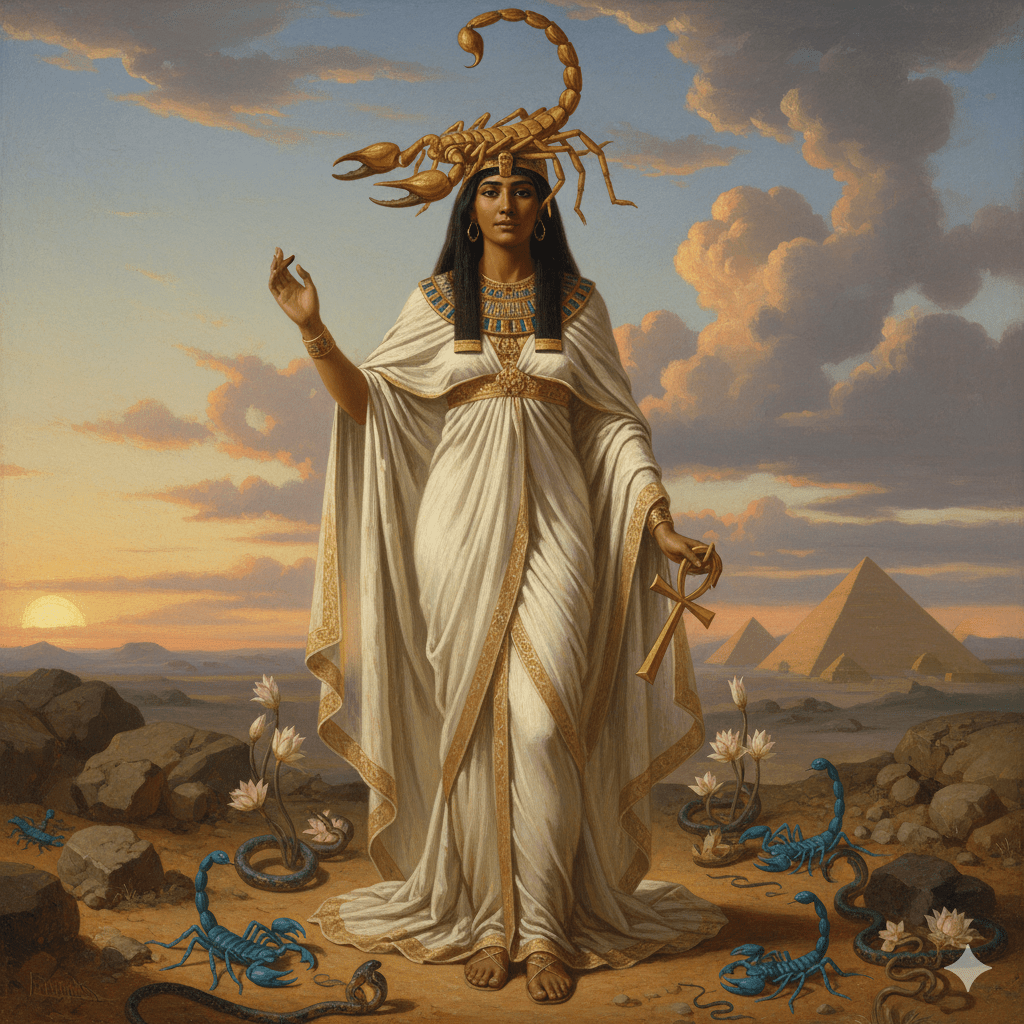
Serket is an Egyptian goddess of protection associated with healing, magic and protection. Her name means “She Who Causes the Throat to Breathe”. Her symbols are the scorpion, the Ankh, and the Was Sceptre, all of which convey her benevolent aspects.
In artistic renderings of the Goddess Serket, she was either depicted as a scorpion or as a woman with a scorpion on her head. She was sometimes depicted with the body of a scorpion and the head of a woman. While Serket did not have any temples, she had a sizeable number of priests in many communities and it can be deduced that they were medical professionals.
Since myths naturally change through the annals of time, Serket’s role changed over and over again. In the end, she became known as one of the guardian gods who watched over souls in the afterlife. She was invoked at funerals for her magical abilities as it was thought she could help the dead to breathe again as they were reborn from their bodies in the afterlife.




 Twinn Swan
Leave a reply to The Sea Star | When the Starfish Regenerates – The Mercantile Cancel reply