
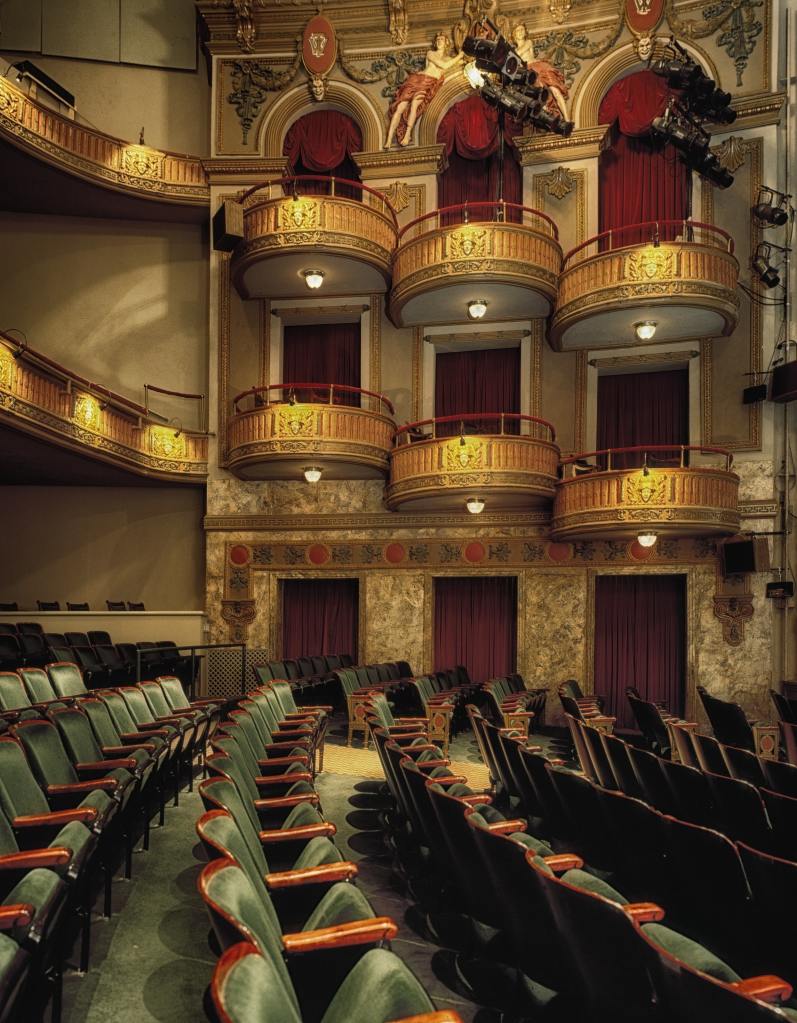
A professional theatre troupe is a business entity. As such, it is required to make a profit for its owners and provide a livelihood for its members. The business structure of a professional theatre troupe could be a sole proprietorship, a partnership or it could be a holding of a large corporation.

The value of a commercially supported troupe’s gross income is determined by three factors. The number of patrons, the price of the tickets and the size of a troupe.
A well-known troupe can rake in a large income because of its ability to attract a large audience that is willing to pay a high price for the performance. Nevertheless, a troupe that plays for a considerably smaller audience can end up better off if the ticket price reflects the niche that the troupe holds in the performance space. Moreover, the troupe’s size also plays a role. A large group is known to command a larger income than a smaller troupe.
At the same time, the larger the group, the higher the demands will be for spending that income. The operating expenses may well be considerably smaller for the smaller troupe, ensuring that it is in a better position overall. A troupe’s major expenditures are: taxes, rent, salaries and production expenses.
In terms of income, there are few troupes that rake in a fairly stable income throughout the year. Fluctuations in income are not unusual. There are usually spikes followed by lulls. These are typically caused by seasonal fluctuations.


 Twinn Swan
Leave a reply to The Theatric Repertoire of Southeast Asia | Where Passion Meets Profit – The Mercantile Cancel reply