
When I began writing Illuminator, I was less interested in sentimental nature writing than in the interruptions—those moments when what we have repressed surfaces and forces us to account. What we forget doesn’t disappear—it returns, implacable and sometimes unkind.
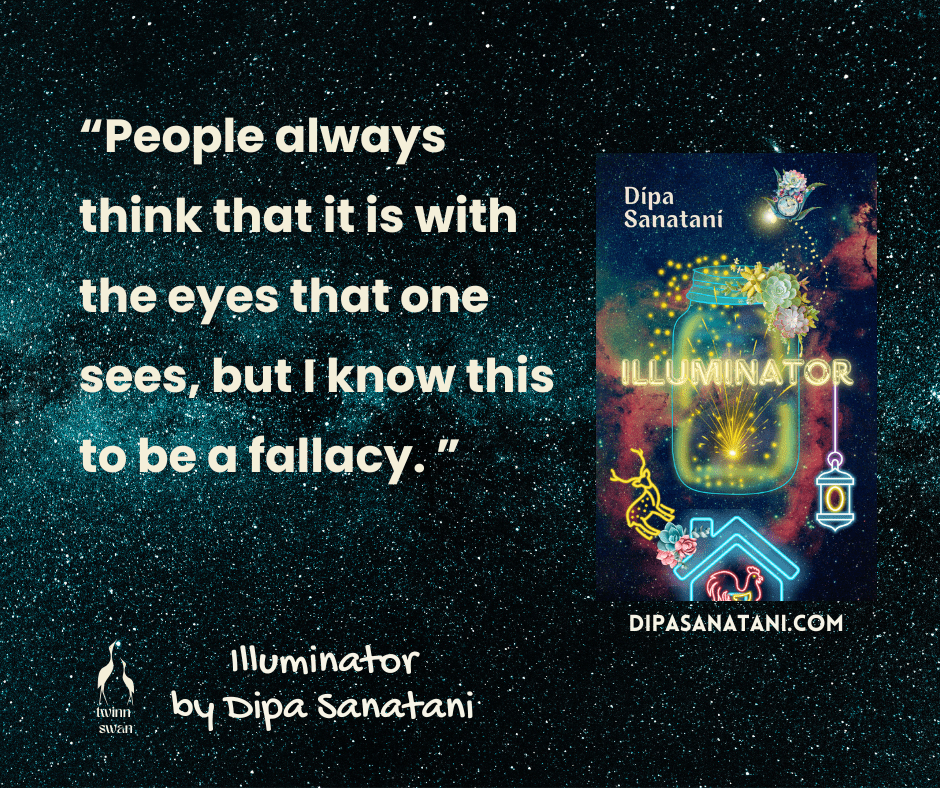
All of my characters do not exist for allegory’s sake. The Old Oak is not wisdom incarnate, the stag is not a cipher for lost innocence. Each is aware that their recollections do not neatly resolve into redemption. They are reluctant witnesses to the environmental crisis: a memory crisis, a crisis of myth, the kinds of rupture that resist closure.
The narrative intertwines spiritual modalities—Hindu, Buddhist, Christian and Norse—to remind us that our relationship to nature will never be harmonious until we confront the violence and exploitation at its heart. There is no nostalgia here for a lost harmony, only the uneasy truth that stewardship begins where amnesia ends. A forest stripped bare of its inhabitants is an artefact of history and a ledger of choices. Memory, in this book, isn’t a source of comfort, but an indictment.
In Illuminator, agency is ambiguous. Trees and animals possess consciousness, but also the burden of history—the scars of human interference, the weight of collective forgetting. To witness the forest in peril is to see oneself implicated. The text resists absolution by acknowledging the cost.
What I sought to evoke, above all, was a narrative that refuses to resolve and that lingers on the edges of memory and consequence. Illuminator is not comfort, not clarity, but a challenge: to remember, to witness, to remain restless in the presence of what the world is becoming.





 Twinn Swan
Leave a comment