
Beneath the day-to-day work of book publishing and the solitary endeavours of authorship, a longer current runs: one that draws together a diversity of spiritual traditions, solitary literary pursuits, and interfaith concepts of the sacred into a singular purpose. For me, these are not discrete facets of a career; they form a web with many crossing threads—each one tugging at the other, shaping what emerges on the page and in the world.
Spirituality is both a quiet undercurrent and a driving force. It isn’t only the subject of my work, but the method and the motivation. Even when writing feels dry or repetitive, spiritual practice invites a return—a patience for repetition, a tolerance for ambiguity, and a capacity to abide with what’s unresolved. The texts I study are interfaith labyrinths whose meanings shift with each reading, each translation, requiring the same skills demanded in meditation: the discipline to remain committed.
Literature, too, is inseparable from the spiritual journey. The process of writing is not limited to self-expression, but is a kind of inner ritual, where language metamorphoses not only the world, but the writer. In books like Ink Stained Soul, the idea that a soul might persist through countless acts of creation asks, “Who is doing the writing?” and “What is being turned into text?” With each work, the intersection of memory and imagination, tradition and rebellion, creates a space where personal experience and inherited legacy converse.
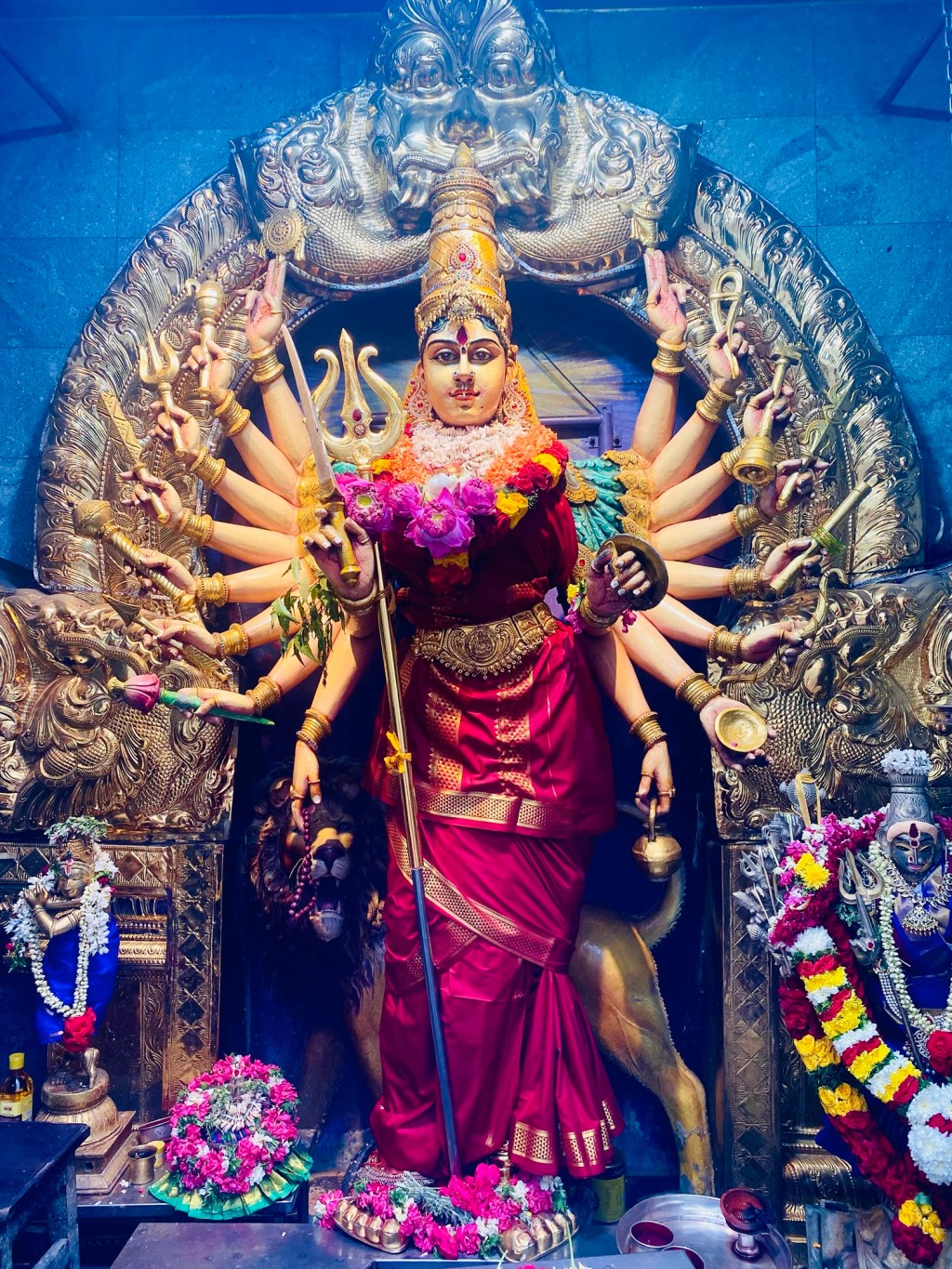
Religion is rarely static. Contemporary rituals based in the ancient world—like the Kala Bhairava Ashtami Puja—prove how living tradition provides both anchor and propulsion. The pressure to abandon my creative work met an answer in ceremony: protection and renewal are not abstract, but embodied and immediate. Personal endeavours intersect with communal ritual, each reinforcing and reiterating the other.
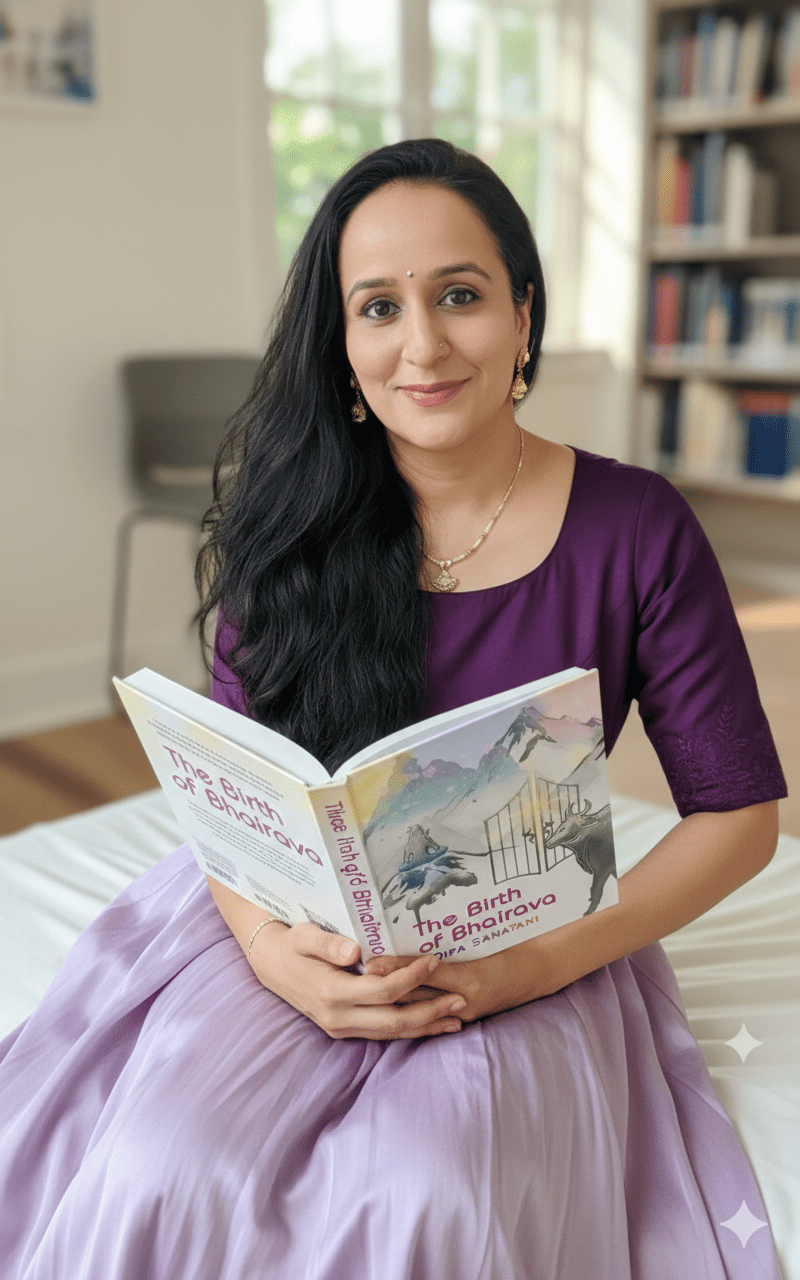
After all, to publish is to submit solitary work to public life, to offer the intimacy of memoir, the intricacies of spiritual and religious insight, to an unknown audience. It means negotiating resistance—cultural, personal, familial—in order to give form to what will otherwise remain private or unspoken. Each book carries the imprint of this web: the uncertainty of inception, the discipline of research, the force of both solitude and collective ritual.
In practice, none of these elements stands isolated. The Merchant Stories is memoir, a record of resistance and reinvention, yet the person who wrote it is not entirely the one who stands here now. My worldview and my approach to business have evolved significantly; much of what I was taught growing up has been left behind as both I—and the world around me—have changed. Divinely Destined returns to many of the same questions, but approaches them through fiction, allowing for a more layered and imaginative exploration. If the memoir captured a lived experience and a set of beliefs that I have since outgrown, the novel inhabits the same territory through a different lens, diving deeper into themes of challenge, evolution, and rebalancing.
The intersection is neither tidy nor always harmonious. It asks for navigation, reconciliation, and persistence. And in those moments—whether sitting with difficult text, enduring societal pushback, or standing in temple at the edge of giving up—a new kind of work emerges: one that is at once ancient and contemporary, solitary and communal, anchored in the individual, but made for the many.



 Twinn Swan
Leave a comment