
In Shaivite thought, the dynamic pulse of consciousness spanda not only animates each being, but sets the stage for the endless interplay of selfhood and relationship. To understand why some women repeatedly attract men who refuse to appreciate or support female flourishing, and why men often default to roles of stasis and control, we must look at the deeper energetic, psychological, and spiritual patterns woven into both sides of the relationship.

From Familiar Stasis to Living Spanda
A woman becomes attuned to spanda by learning to honour her inner rhythms, creative desires, and emerging autonomy. This requires turning away from inherited expectations or familial patterns where control, domination, or suppression were normalised.
Through practices of inner listening—meditation, reflection, creative work—she develops sensitivity to what enlivens her and to what dampens her vital pulse. By actively walking this path, her energetic presence changes. She begins to act from a place that recognises her creativity and becoming as sacred, rather than conditioned by what others will accommodate or approve.
This shift creates a kind of magnetic shift: relationships grounded in stasis and suppression no longer feel safe or sustaining, and boundaries naturally arise to protect her growth. Partners who cannot move with her expanding pulse are experienced as burdensome and, ultimately, less attractive.
The Male Role
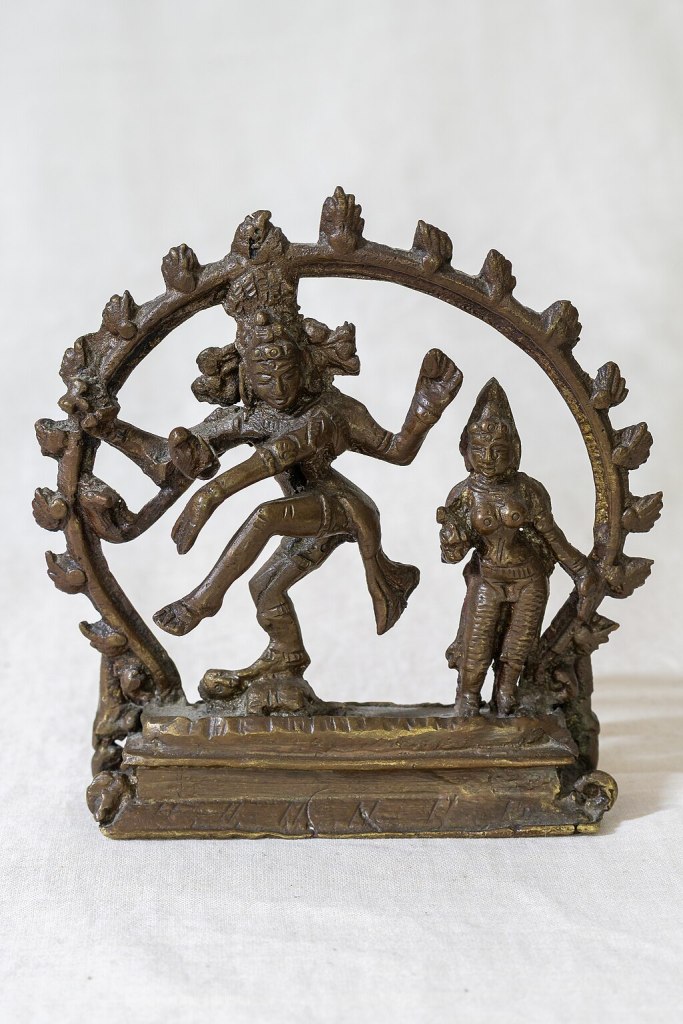
In Shaivite symbolism, Shiva in his static aspect can represent consciousness that is pure but unmoving, formless but insistent on permanence. In human relationships, this archetype manifests as a tendency in some men to equate love or partnership with fixity, control, or being the axis around which all movement revolves.
The masculine often defaults to stasis because movement and growth—when embodied by his partner—demand that he relinquish the comfort zone of his old certainties. Her career successes, her creative surges, and her desire for expansion serve as living reminders that life is always in flux.
For many men, especially those shaped by environments of rigid roles or unexamined authority, this is profoundly unsettling. Growth invites the unknown, and the unknown is often conflated with loss: loss of status, predictability, or even masculine identity itself.
When their partner flourishes, it can trigger deep insecurities: What is my role now? Will I be left behind? Rather than risk these difficult questions, many unconsciously default to diminishing her achievements, withholding support, or withdrawing emotionally. Suppressing her spanda is, at root, an attempt to hold reality still and keep one’s identity intact.
The Dynamic of Attraction
At the subtle level, energy in relationships seeks resonance. If a woman, due to early conditioning or habitual self-doubt, holds back her own spanda—her creative drive, her autonomy—she may ‘vibrate into’ relationships with partners who reinforce her own internal stasis.
When a woman’s inner world is shaped by suppressed spanda—hesitation, chronic self-questioning, a pattern of making herself smaller for others—she ‘broadcasts’ a frequency that unconsciously draws in partners who mirror or magnify her own stasis.
These partners may be controlling, detached, or unable to support creativity and change, and the relationship dynamic will feel uncannily familiar, even if it is painful. If, however, she chooses to awakens to her own pulse and refuses to suppress it, she reshapes both whom she attracts and what she will accept.
When a woman begins to listen for the subtle stirrings of her own authentic desire, voice, and creative will—and acts upon them—her energy field changes. She starts vibrating from a place of expansion, which in turn alters the kinds of relationships she attracts or sustains. At the subtle level, relationships are configurations of energy.
The male, if he is willing, is also called into the dance of spanda. When he faces his own tendency toward stasis, he opens to his partner not as a subordinate, but as a co-creator—one whose growth is a challenge and an opportunity to rediscover his own lost vitality.
But if he rejects this call, the relationship becomes an enactment of spanda denied: she pulses outward, he pulls toward stillness, until the tension becomes unsustainable.
New Relationships?
From a Shaivite perspective, this entanglement is not resolved by seeking external validation or merely ‘manifesting’ a new and different partner. The deeper invitation is to become aware of how both partners are entwined in the pulsation and withholding of spanda—how, by attending to her own subtle impulses toward movement, expression, and renewal, a woman begins to alter the fundamental rhythm of her shared reality.
Shifts in her own awareness and micro-actions introduce disturbance into the stagnant pattern: she may voice a truth previously withheld, gently disrupt a habitual silence, or risk initiating a new pursuit. Even small awakenings to her spanda create fissures in the stasis, not through dramatic rupture, but by recalibrating the principle of pulse and transformation.
The dynamic, then, is not solely about the polarity of attraction, but about how individual and shared patterns can be, over time, subtly recoded from within—by attending to, and daring to act upon, the minute tremors of spanda that continuously arise, even in the most settled or repressive relationships.
Spanda is thus both a diagnostic lens for recognising self-sabotaging or stagnant relationships, and a lived method for inviting evolution from within the heart of habitual stasis.
Toward Mutual Becoming: A New Mode of Relationship
Shaivism offers a path for both partners. The invitation is not merely for the woman to awaken her pulse of becoming, but for the man to attune to spanda within himself: to trust his capacity to change, to support growth in others, and to find value not in rigidity, but in responsiveness. Here, both partners become co-artists of a life in motion, sustained by the sacred pulse that animates the universe.
The union flourishes when the man relinquishes his need for stasis and learns to ride the wave of emergence with his partner, appreciating that his own depth is enriched—not diminished—by her creative expansion. In this mutual honouring of spanda, relationship becomes a living practice where both can continually recreate themselves and each other, embodying the fullest expression of the Shaivite dance.


 Twinn Swan
Leave a comment