
In Hinduism, the act of worshipping a deity is not about revering a physical object, but about establishing a living and conscious presence of the divine within that object. When artisans create a murti icon of a deity–whether from stone, metal, or wood–it is initially regarded as an inert form, beautiful, but spiritually dormant. The transformation from mere material to sacred embodiment occurs through the elaborate ritual of Pran Prathistha.
Pran Prathistha means ‘to establish the breath prana of life prathistha‘. The ritual is both symbolic and metaphysical. It is believed that although the divine is omnipresent and everywhere, but for the purpose of worship, the infinite is invited to reside in an icon in a finite form.

The Pran Prathistha ceremony involves:
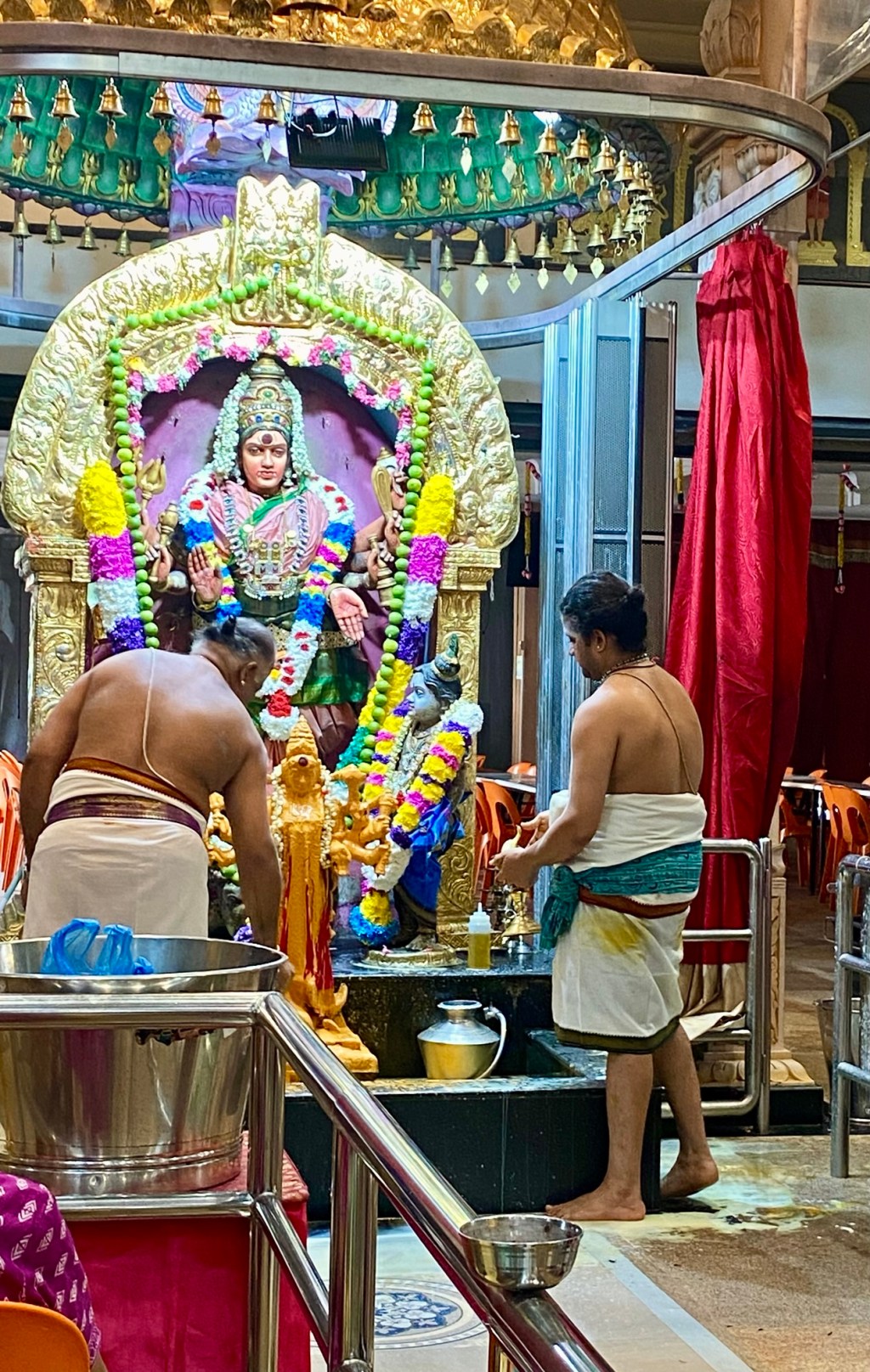
- Purification: The icon is bathed, anointed, and ritually cleansed to remove any impurities, both physical and subtle.
- Chanting of Mantras: Priests recite powerful Vedic hymns and tantric mantras, which are considered to have the vibrational potency to attract and anchor divine energy.
- Nyasa and Invocation: Through the use of mudras gestures and the touching of various parts of the icon, the priest symbolically installs the senses and energies of the deity into the form.
- Opening of the Eyes: A particularly significant moment is when the eyes of the murti are ritually ‘opened’ sometimes by painting the pupils or touching them with a golden needle, signifying the awakening of divine consciousness within the icon.
- Prana Prathistha Proper: The core act is the invocation and installation of the deity’s life force, often symbolised by the blowing of a conch, the waving of lamps, and the recitation of specific invocations.
After this ritual, the icon is no longer just an icon, an image or a representation of the Divine. It is regarded as a living deity, capable of receiving offerings, responding to prayers, and bestowing blessings.
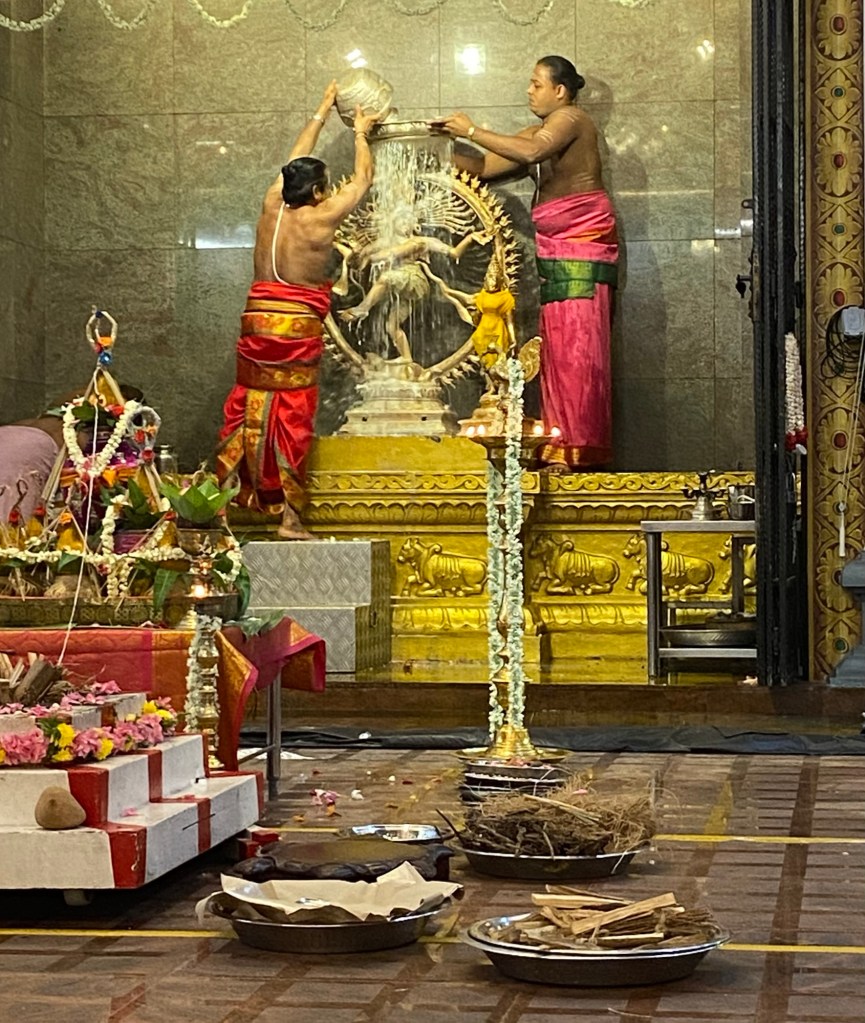
The Role of Abhisheka: Sustaining the Divine Presence
Once Pran Prathistha is complete, the icon is treated with the reverence due to its status as a living being. Abhisheka, the ritual bathing of the deity, is central to this ongoing relationship. The ritual is not merely a symbolic act, but a profound expression of devotion and a means of maintaining the sanctity and spiritual energy of the icon.
During Abhisheka, the icon is bathed with sacred substances such as: water from holy rivers, milk, honey, yogurt, ghee, coconut water, sandalwood paste, and fragrant oils. Each substance has its own spiritual significance and is believed to purify, nourish, and please the deity. The act of bathing the icon is accompanied by the chanting of mantras and hymns, which further energise the space and the icon itself.
Abhisheka serves several purposes:
- Purification: It cleanses the icon of any physical or energetic impurities that may have accumulated.
- Reaffirmation of Presence: It is a daily or periodic reaffirmation of the divine presence, a way of continually inviting and honouring the deity.
- Devotional Offering: It expresses the devotee’s love, respect, and surrender to the divine, deepening the personal bond between worshipper and deity.
The Deeper Philosophy
Underlying these rituals is a profound metaphysical understanding. In Hindu thought, the divine is both immanent and transcendent–present everywhere, yet beyond all forms. The process of Pran Prathistha is a way of making the infinite accessible, allowing devotees to interact with the divine in a tangible, intimate manner. The icon becomes a bridge between the material and spiritual realms.
This is why Swayambhu self-formed lingams like the Banalingam are considered even more potent: they are believed to have been chosen and shaped by the divine itself, requiring no human intervention to be sacred. Manmade icons, by contrast, require these elaborate rituals to become vessels of divine presence.
Pran Prathistha and Abhisheka are not mere formalities–they are the heart of Hindu ritual practice, transforming art into living divinity and sustaining that presence through daily acts of love and reverence. These rituals reflect a worldview in which the sacred and the mundane are intimately intertwined, and in which the divine is invited to dwell among us, not just in spirit, but in form.
A Deeper Relationship with the Divine

For readers captivated by stories of love, loss, and spiritual awakening, my novel The Heart of Shiva offers a lyrical and compassionate journey into the mysteries of faith, rebirth, and enlightenment. Centred on Priestess Tara–whose unwavering devotion to Lord Shiva is both her strength and her solace–the novel explores the scars of love shattered across lifetimes and the healing that emerges through spiritual practice.
Through evocative prose, poetry, and myth, I bring to life the rich tapestry of Hindu-Buddhist traditions, weaving together themes of motherhood, reincarnation, and the search for the True Self. Within these pages, readers will find not just a meditation on the cycles of rebirth and the transformative power of faith, but also an invitation to reflect on their own unconventional spiritual journeys.
The Heart of Shiva is a call to introspection, urging us to confront our vulnerabilities and embrace the divine essence within-regardless of gender or tradition. Available at all major online bookstores and at Singapore’s National Library Board (NLB) libraries, this novel is a compelling read for anyone seeking a fresh perspective on the priesthood, the Divine Feminine, and the eternal and enduring quest for enlightenment.


 Twinn Swan
Leave a comment