
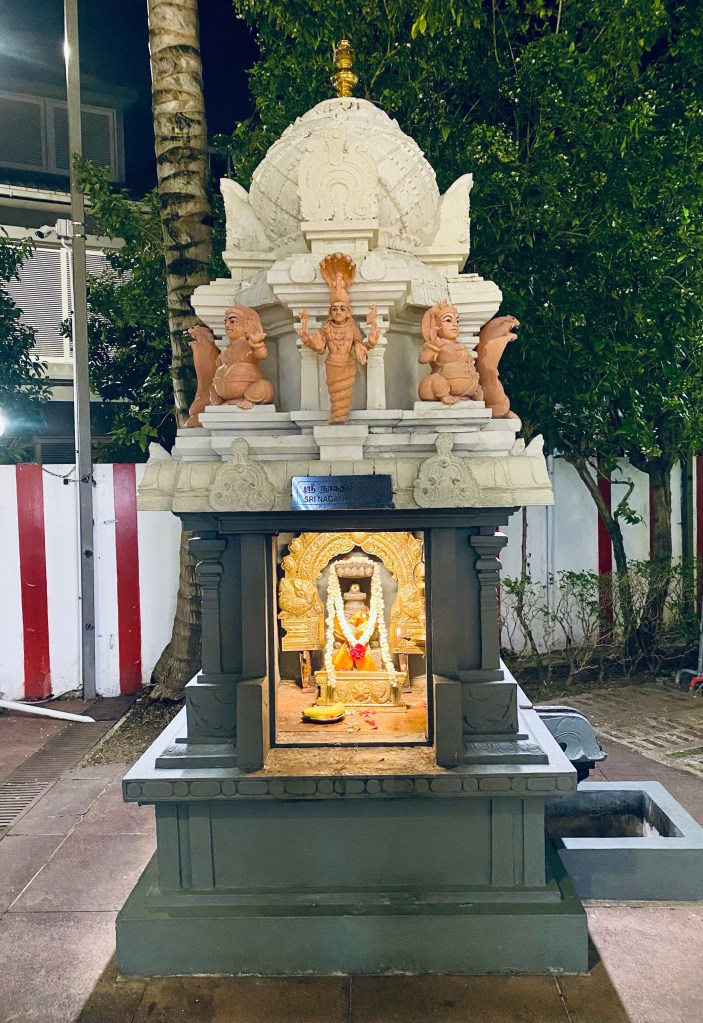
Nagathampiran is a powerful cosmic force worshipped for profound spiritual, astrological, and ecological reasons. Unlike mainstream Hindu gods, whose worship follows strict Vedic or Agamic traditions, devotion to Nagathampiran stems from an ancient, earth-bound spirituality that predates organised religion. People turn to this serpent deity for protection, healing, and transformation—particularly when conventional rituals fail.
At its core, Nagathampiran worship addresses deep-seated fears and karmic imbalances. The serpent is both destroyer and protector, capable of bringing misfortune (such as snakebites or ancestral curses) but also bestowing blessings of fertility, wisdom, and hidden knowledge. This duality makes Nagathampiran a deity of extremes—appealed to in moments of desperation but also revered in daily life for maintaining harmony between humans and nature.

Who Should Worship Nagathampiran?
Those Bound by Karmic and Astrological Afflictions
In Hindu astrology, the serpentine shadow planets Rahu and Ketu represent karmic debts and unresolved past-life struggles. Individuals with strong Rahu-Ketu influences in their birth charts—especially those suffering from chronic obstacles, health issues, or inexplicable misfortunes—are often advised to seek Nagathampiran’s intervention. Specific astrological conditions, such as Kala Sarpa Yoga (where all planets fall between Rahu and Ketu) or Sarpa Dosha (a curse-like affliction causing delays in marriage and career), are traditionally remedied through serpent rituals.
Villagers, Farmers, and Guardians of the Land
Since ancient times, serpents have been linked to the life-giving forces of water and soil. Farmers worship Nagathampiran to ensure timely rains and protection from crop-destroying pests. Many rural shrines sit near wells, lakes, or anthills—places where serpents are believed to reside—reinforcing the connection between the deity and natural abundance. Unlike urban temple worship, these practices are deeply embedded in agrarian life, where the serpent is an ecological guardian.
Tantrikas, Healers, and Spiritual Seekers
For practitioners of Tantra, Nagathampiran embodies the coiled Kundalini Shakti, the primal energy lying dormant at the base of the spine. Awakening this force requires mastery over fear—something the serpent, both feared and revered, symbolises perfectly. Additionally, traditional healers (especially in Tamil and Sri Lankan communities) invoke Nagathampiran to remove ancestral curses (Pitru Dosha), particularly those involving untimely deaths or unresolved grievances passed down through generations.
Rituals: The Hidden Language of Serpent Worship
Unlike the structured, Sanskritized rituals of mainstream Hinduism, devotion to Nagathampiran follows an older, more intuitive path. Offerings often include raw eggs, milk, and even toddy (fermented palm wine)—elements considered taboo in orthodox worship. These are not arbitrary choices; they reflect the serpent’s primal nature. The egg symbolises rebirth, milk represents purity and nourishment, and toddy signifies a bridge between the earthly and the divine.
Midnight rituals (Naga Chaturthi Pujas) are particularly potent, as this is when serpents (and by extension, their divine counterparts) are believed to be most active. Unlike daylight ceremonies, these observances are raw, unfiltered, and steeped in folk magic. Devotees whisper their desires into the ears of stone serpent idols, trusting that Nagathampiran will carry their pleas into the unseen realms.
Nagathampiran vs. Mainstream Naga Worship
While pan-Indian traditions worship Nagas like Adishesha (Vishnu’s cosmic serpent) or Manasa (the Bengali snake goddess), Nagathampiran remains distinctly tied to Dravidian folk traditions. Where Adishesha is philosophical—a symbol of infinity—Nagathampiran is immediate and visceral, a deity who intervenes directly in human suffering. This difference is also reflected in social dynamics: while Brahminical temples often sideline serpent worship, marginalized communities embrace it wholeheartedly, keeping its raw, unscripted essence alive.
The Living Power of an Ancient Deity
Nagathampiran’s enduring worship is a testament to humanity’s need for divine forces that mirror the unpredictable, often harsh realities of life. This is not a god of lofty philosophy, but of earthly struggles, ancestral burdens, and hidden strengths.
To understand Nagathampiran is to grasp a spirituality that never fully surrendered to organised religion—one that still whispers its truths in the rustling of leaves, the flicker of a lamp in a darkened shrine, and the coiled silence of a waiting serpent.
For those drawn to this path, the message is clear: Nagathampiran does not offer easy blessings. But for the sincere devotee, he unlocks doors that other gods cannot touch.




 Twinn Swan
Leave a comment