
Mukhalingas are found throughout India and Nepal. They also appear in the former Champa kingdom, present day in Vietnam, as well as in Cambodia and Borneo in the Southeast Asia. A mukhalinga is a specific type of Shiva linga that features one or more faces carved onto it, while a standard Shiva linga is typically a smooth, cylindrical stone without any facial features.
While both represent Shiva, a mukhalinga emphasizes specific aspects or forms of the deity. A five-faced (pancha-mukhalinga) represents Shiva’s five aspects: Sadyojata, Vamadeva, Aghora, Tatpurusha, and Ishana.

Mukhalinga
The Mukhalinga at Pashupatinath Temple presents a captivating representation of Lord Shiva’s five faces, each embodying distinct aspects of the deity and cosmic elements.
The western face, known as Sadyojata or Barun, represents the element of earth and symbolises creation and happiness. This face embodies the nurturing aspect of Shiva, the source of life and joy in the material world.
Turning to the north, we encounter Vamadeva, also called Uma Maheshvara. Associated with the element of water, this face represents preservation and is believed to provide both physical and mental healing. It reflects Shiva’s role as a protector and healer, offering solace to his devotees.
The eastern face, Tatpurusha, embodies the element of air and represents the consciousness inherent in all souls. This aspect of Shiva speaks to the divine spark within every being, connecting the individual to the cosmic consciousness.
Facing south is Aghora, linked to the element of fire. This face symbolises dissolution and depicts both peacefulness and ferocity. Aghora represents Shiva’s role in the cycle of destruction and regeneration, reminding us of the impermanence of all things and the transformative power of change.
Finally, the zenith-facing Ishana represents the element of ether or space. This face transcends the qualities of the other faces, symbolising the merger with universal consciousness. Ishana embodies the highest spiritual attainment, the ultimate union of the individual soul with the divine.
These five faces collectively represent the pancha bhuta or five elements, showcasing Shiva’s mastery over the fundamental building blocks of the universe. They also symbolise the cyclical nature of creation, preservation, and dissolution, reflecting the Hindu understanding of cosmic order and the role of the divine in maintaining this balance.
The Mukhalinga at Pashupatinath thus serves as a profound spiritual symbol, inviting devotees to contemplate the multifaceted nature of divinity and their own place within the cosmic dance of creation and destruction orchestrated by Lord Shiva.
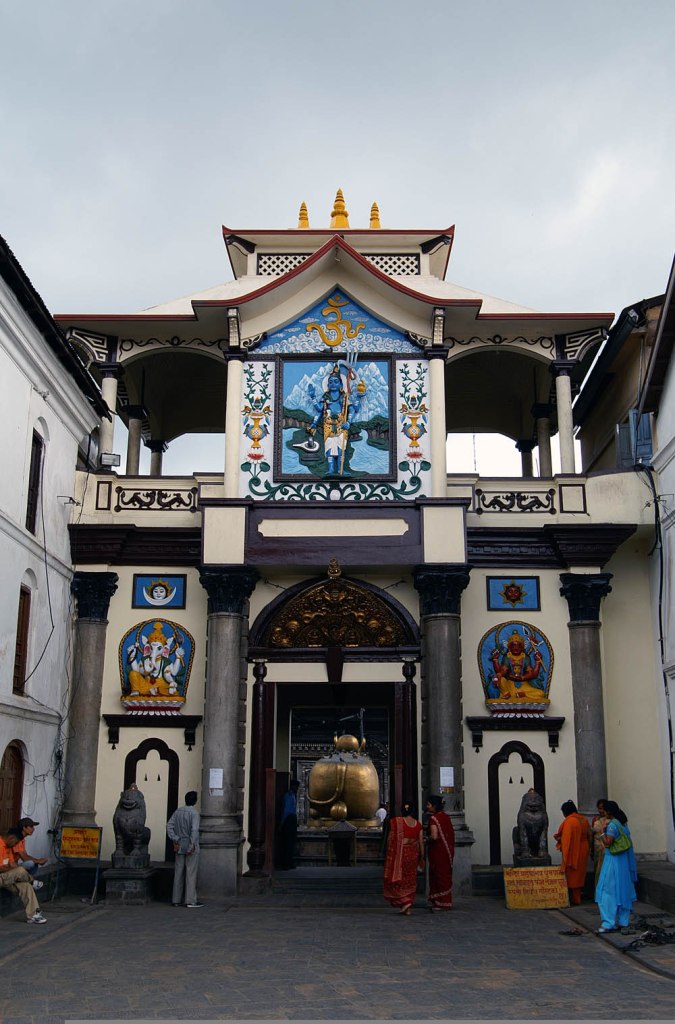
Pashupatinath
The mukhalinga at Pashupatinath holds special significance as it represents Shiva in his aspect as Pashupati, the Lord of Animals. This representation emphasises Shiva’s role as the supreme soul (Paramātman) that permeates and governs all beings (pasu).
The concept of Pashupati is deeply rooted in Hindu philosophy. “Pashu” refers to all living beings, including animals, while “pati” means lord or master. This name underscores Shiva’s dominion over all forms of life, emphasising his role as a guardian and protector of all creatures.
In the Pashupata tradition, humans are considered “pashus” or beasts until they achieve spiritual liberation. The term “pashu” in this context refers to the bound soul, tethered by worldly attachments and ignorance. Shiva, as Pashupati, is seen as the liberator who can free these souls from the cycle of birth and death.
The Pashupata sect, one of the oldest Shaivite traditions, is closely associated with the worship of Pashupati. This sect originated in the region around Pashupatinath and had a significant influence on the development of Shaivism. The Pashupatas followed ascetic practices and believed in the power of Shiva to grant liberation from the bonds of existence.
The mukhalinga at Pashupatinath, with its five faces representing different aspects of Shiva, serves as a powerful symbol of this philosophical concept. It embodies the idea of Shiva as the supreme reality that encompasses all aspects of existence, from creation to dissolution.
The worship of Pashupati at Pashupatinath represents a profound spiritual philosophy that sees all life as interconnected and governed by a supreme consciousness, with Shiva as the ultimate liberator of bound souls.




 Twinn Swan

Leave a comment