
Forget the sanitised crime dramas. Kohrra, directed by Randeep Jha, isn’t interested in a clean and simple whodunit story where we sit glued to our seats as we find the killer and live happily ever after. Instead, we are all thrown headfirst into a decaying city, where the air, symbolically thick with industrial smog, grips the entire town in moral decay and decline. In this city, justice isn’t a hero to be found; it’s a ghost haunting the crime scene.
Kohrra plunges us into a world where truth and justice long to be revealed. The legal system, embodied by the police officers Balbir and Gurwinder, is mired in a labyrinth of corrupt bureaucracy. The constant media surveillance is a far cry from the fourth estate as journalists scramble to get the next sensationalist story through any and by all means necessary. In this city, justice feels like a crumbling inscription on a derelict building, a stark reminder of an unattainable ideal in the face of the brutal reality on the streets.

Kohrra delves us all, headfirst, into the human desire for justice beyond the confines of the law. Characters find themselves wrestling with their own moral compasses as their passions, obsessions and hidden vendettas drive them to seek retribution outside the flawed legal framework. Can true justice exist when the law is itself is a symptom of a deeper societal illness?
Kohrra doesn’t offer clear-cut villains. It delves into the moral ambiguity that festers when there isn’t a clear good guys vs bad guys narrative. Personal weaknesses intertwine with the broader societal issues. We see Balbir, a seemingly honest cop, haunted by ghosts of his past and a fractured relationship with his daughter. Gurwinder struggles with his personal life while grappling with the limitations of a system that seems rigged against those it’s supposed to serve. Here, morality isn’t black and white, but a spectrum of shades of grey, reflecting the morally ambiguous choices people make to create justice for themselves.
What truly drives Kohrra is the exploration of the characters’ moral compasses, stained by the harsh realities they contend with on a day-to-day basis. Poverty, a lack of opportunity and a suffocating social hierarchy all come together to breed envy, jealousy and resentment. Crimes aren’t neatly packaged acts of malice done in cold murder, but the result of a social system that pushes people to the brink. We see this in the grieving fiancee, Veera, clinging to a dream of escape through marriage. Saakar, the scorned ex-boyfriend, simmers with frustration, a victim of unfortunate circumstance. Even the family feud, fuelled by land disputes, reflects the larger struggle for a piece of a shrinking pie.
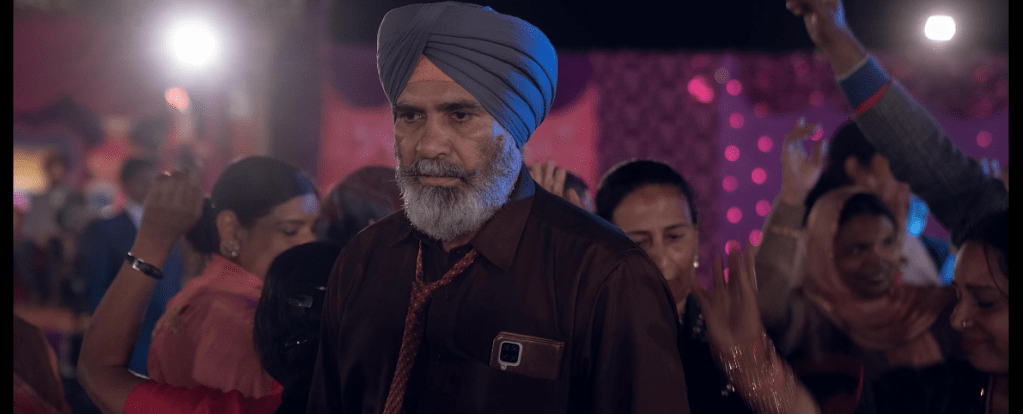
Kohrra doesn’t shy away from critiquing the consequences of seeking justice outside the broken system. The characters’ pursuit of retribution becomes a Faustian bargain. They make moral compromises that leave them forever stained. The violence they unleash becomes a twisted reflection of the justice they crave, leaving everyone tainted and the lines between justice and vengeance blurred.
But the pursuit of justice, even this very personal brand, comes at a heavy price. The characters in Kohrra bear the emotional scars of their experiences. Moral compromises are made, sacrifices offered. Violence begets violence, leaving everyone with a small piece of the broken shard of the shattered ideal. It seems that true justice demands a steep price that few are willing to pay for everyone is guilty of something in their own small or big way.
Adding to the bleak portrait is a broken social contract. The very institutions meant to uphold justice, like the police force, are riddled with flaws. Trust has evaporated, replaced by a profound sense of disillusionment with the system. This breakdown leaves individuals scrambling for a sense of fairness on their own terms, further blurring the lines between justice and personal vengeance.
Kohrra doesn’t offer easy solutions or comforting platitudes. Justice becomes a tangled mess, interwoven with the harsh realities of poverty, social injustice and a broken system. The film forces us to confront the limitations of the legal system and question the very definition of justice. In the smog-choked streets of Kohrra, the quest for justice becomes a quest for truth, with more questions than answers, leaving us with a lingering sense of frustration with the status quo as we yearn for a more compassionate future.




 Twinn Swan
Leave a comment