
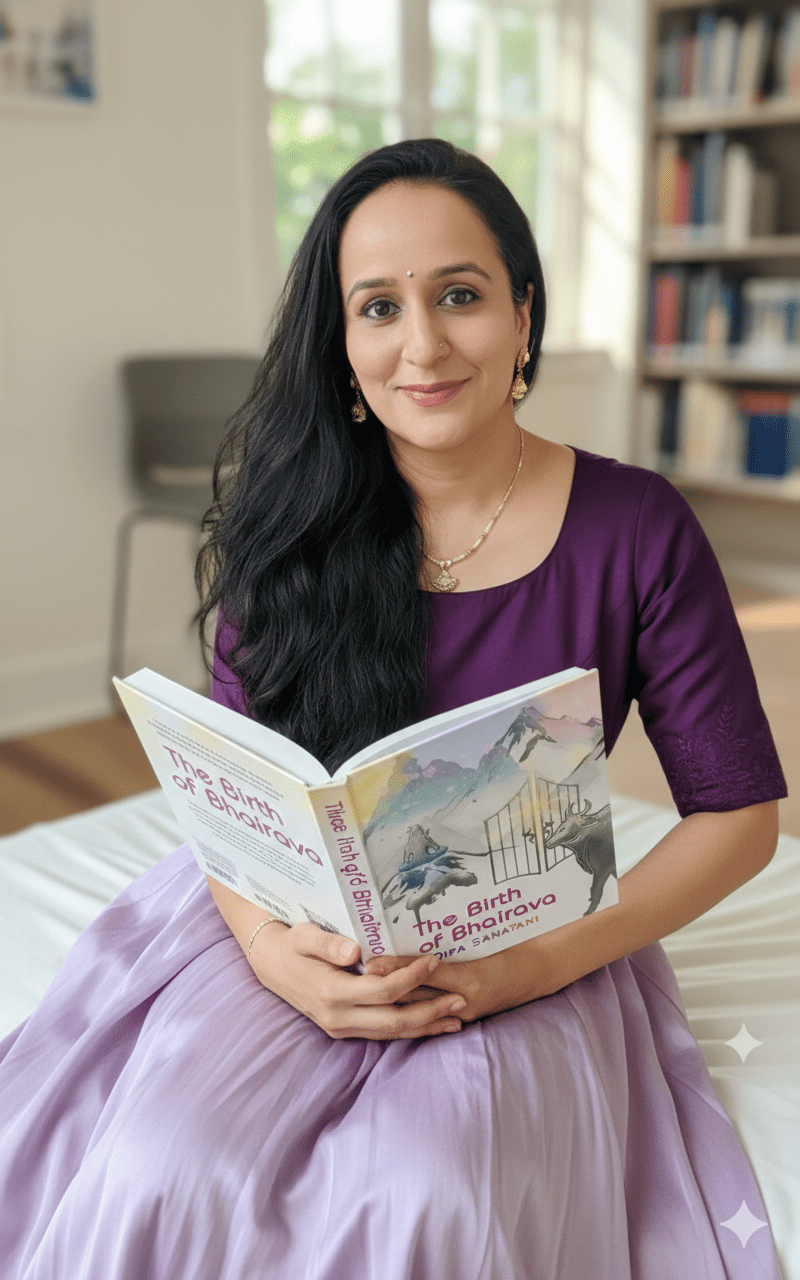
At an international forum this weekend, I discussed the inspiration behind my recent book, “The Heart of Shiva.” The conversation flowed, weaving through themes of religion and philosophy. Then, the discussion took an unexpected turn. A participant asked about my thoughts on our country’s new upcoming Prime Minister, Mr Lawrence Wong. This question caught me off guard, as the focus had shifted away from my reincarnation fiction novel and towards the political landscape of my homeland, Singapore. It was not a question I expected and it was not one that I was prepared for.

The only response I could give–and perhaps the one that I knew how to give–was that I, personally, didn’t choose PM Wong. The party chose him. There are significant differences between the parliamentary and presidential forms of government. In Singapore, we have a parliamentary system of governance based on the Westminister model. We don’t get to choose exactly who governs the nation. We choose the party and they choose the leader.
After the talk ended, I wondered: could I, a statistical outlier, represent the mainstream tapestry of Singapore? The answer to me, was a resounding no, even though it should not have been. This is a conundrum that minority groups often face. The truth is: we do not typify ‘the average Joe’ on the street. Even when I am with my fellow Singaporeans, I feel like a statistical anomaly. Given such a context, what relationship, if any, am I expected to form with my leaders; beyond knowing what is discussed in the media?
Perhaps it is, indeed, the 12 years I spent abroad that shaped my worldview into one that is less local and more global. My experience as a minority, while tremendously enriching, wouldn’t be and isn’t readily relatable to everyone in Singapore. Returning home to Singapore in 2019 has been a challenge every single step of the way. The gleaming skyscrapers and relentless pursuit of economic success dominates the national narrative, a narrative that I do not feel leads to an emotionally and spiritually fulfilling existence.

When I gave my talk, I touched on how the Constitution of Singapore provides for freedom of religion. Article 15 of the Constitution states that citizens have freedom with respect to professing, practicing and propagating their religion as long as they do not violate any laws relating to public order, public health and morality.
In terms of numbers, Hindus only represent five percent of the population of Singapore. My religious fiction book, The Heart of Shiva, focused on themes such as enlightenment and rebirth. These are not necessarily niche topics. But they can certainly feel that way when one has spent 10 years of their educational life studying in Christian schools where evangelisation was common, normal and widespread. I am familiar with the teachings of Christ and for that I am grateful. At the same time, I feel I must acknowledge some of the darker realities of pushing an agenda on impressionable and perhaps even gullible young minds by people in positions of authority.
I am all too aware that I do not represent and cannot represent ‘the average Joe’ on the street. My books represent, not the mainstream Singaporean, but those like me, who walk and wander off the beaten path. How many Singaporeans, after all, delve into years and years of religious studies in order to write a reincarnation fiction novel? Perhaps not many, but that is not the point. The point is that we shouldn’t be forced to conform and fit into a pre-made mould. It is a stifling process and one that is not permitting me to grow beyond the limitations that have been placed all around me.
The afterlife–the entire process of judgment–is a topic I explored in The Heart of Shiva through the lens of Tara: a priestess who is blessed with the ability to see beyond the veil. The undeniable truth is we cannot take our wealth nor our positions of power with us into the afterlife. Our ‘job’, no matter how flashy or prestigious, will be left behind. Our wealth, no matter how grand or abundant, will belong, by default, to someone else upon our departure from this world. Religious beliefs may be subjective and based on one’s own spiritual beliefs, but the realities of physical death are undeniable.
In line with that, I firmly believe that the purpose of life cannot be the pursuit of either wealth or money, but something which goes beyond that. I highly doubt that I will find many hands up in the air to agree with this sentiment. Those that do may well find themselves facing economic hardship, especially in a city that is becoming increasingly expensive and where the cost of living is ballooning at a higher rate than wage increases. What meaning, if any, can the concept of renunciation hold when faced with such unyielding and harsh economic realities?
Unchecked materialism, I feel and fear, is dangerous. At the same time, a materialistic worldview cannot be invalidated. While Singapore’s gleaming and glittering facade prioritises efficiency and progress, our unique stories, only ever woven by those who stray from the well-trodden path can, I hope, find a meaningful place beyond tokenism. A functional society is one that values not just material success, but also the quest for deeper meaning.
After all, we are only temporary inhabitants of the island and not its owners. A society that understands and is prepared for its own mortality will undoubtedly find their journey leading them beyond the confines of the tangible world. For when we deny death and the afterlife, we have never truly lived at all.



 Twinn Swan
Leave a comment