
Just as we fully obeyed Moses, so we will obey you. Only may the LORD your God be with you as he was with Moses.
Joshua 1:17
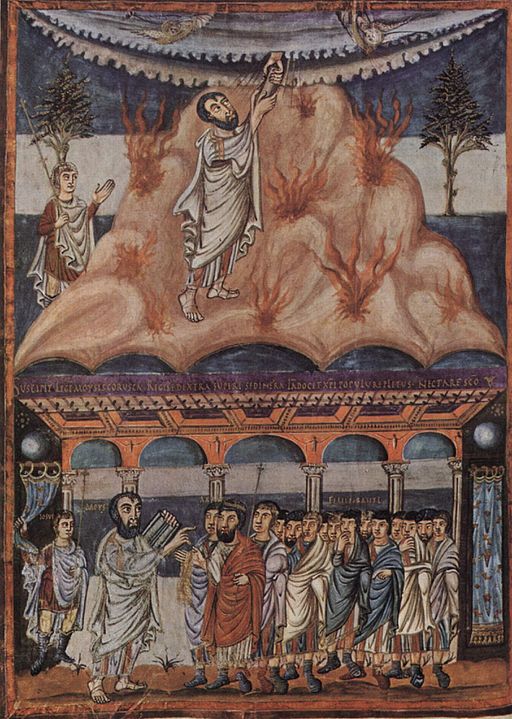
Joshua was, first and foremost, Moses’ successor. While the succession itself may have happened overnight, Joshua definitely wasn’t thrust into the leadership overnight. There was a long and arduous period of preparation before that took place. After all, Joshua had spent decades as Moses’ right-hand man, witnessing firsthand God’s power and the challenges of guiding a people in exile. This experience instilled unwavering faith in God’s guidance, a crucial quality for a leader entrusted with the momentous task of ushering the Israelites into the Promised Land: the goal of their exodus from Egypt.
Moses did not necessarily ‘choose’ Joshua. Rather, it is Joshua who underwent a long apprenticeship, highlighting his worthiness as a leader based on years and years of faithful service. Joshua was a second-generation leader. His role was that of a bridge between Moses’ prophetic leadership and the more judicial role required to continue the legacy and vision of their forebears. Even though Joshua ‘inherited’ the mantle of leadership from Moses, he did not and could not replicate his predecessor.
Moses and Joshua represented different aspects of divine leadership – Moses, the powerful revealer, and Joshua, the faithful executor. Joshua serves as a bridge between the era of Moses and the establishment of the Israelites in the Promised Land. He carries forward the legacy of the past while adapting to lead a new generation. This reminds us of the importance of continuity and adaptation in leadership.

Warfare
The Book of Joshua focuses on the strategic victories of the Israelites, but war’s psychological impact is rarely explicitly addressed. However, by reading between the lines and considering the historical context, we can imagine the toll it took on both the Israelites and the Canaanites. When we discuss this topic, it’s important to understand the book within its historical context, where warfare was often brutal and seen differently than it is today.
While the Book of Joshua meticulously details the strategic triumphs of the conquest, a deeper understanding emerges when we consider the likely psychological toll of war on both the Israelites and the Canaanites. This layer of complexity adds a profound dimension to the narrative.
Early the next morning Joshua mustered his army, and he and the leaders of Israel marched before them to Ai.
Joshua 8:10

Exile vs. Settlement
The Israelites had spent decades wandering the wilderness. Entering Canaan meant leaving behind a familiar, albeit harsh, way of life. This possibly could have inspired, within them, anxiety and uncertainty about the future. Canaan, on the other hand, was a settled land with established societies. The Israelites, a nomadic people, might have harboured a fear of the unknown and the potential dangers they might face.
Warfare, even for the victors, is a brutal experience. The Israelites likely witnessed and participated in acts of violence that could have caused lasting psychological trauma. The conquest narrative depicts battles, but it doesn’t dwell on the human cost. The Israelites would have suffered losses and individuals would have grieved for fallen family members and friends.
Joshua’s leadership challenge would have undoubtedly included keeping the diverse Israelite tribes unified amidst the stresses and anxieties of war. This required addressing morale, managing dissent and fostering a sense of shared purpose in spite of the difficulties they were going through.
The Canaanites were being driven from their ancestral land, facing displacement and the destruction of their communities. This would have caused immense fear, anger, and a sense of loss. The conquest not only threatened the Canaanites’ physical safety but also their cultural identity. The destruction of their religious sites and the imposition of Israelite customs would have been deeply unsettling.
Despite the narrative portraying the Canaanites’ defeat as swift, there were likely pockets of resistance and rebellion. These acts would have come at a great psychological cost to the Israelites, who may have feared the brutal repercussions of their actions. Exploring these possibilities allows for a more nuanced understanding of the human cost of war and the lasting impact it has on individuals and societies, even beyond the immediate battles and victories.
Trauma
Concerns linger about the potential for victors of war to perpetuate the cycle of violence. When a leader is chosen primarily for his astuteness in warfare, he may well prioritise military solutions over peace and harmony. This raises ethical questions about the conquest’s justification and the potential for future conflicts.
Leaders throughout history have grappled with the aftermath of war. Studying how other societies addressed the trauma of violence can offer additional insights into potential strategies Joshua might have employed.
After all, leading a society demands more than battlefield prowess. Leaders need to establish social order, build a functioning society and navigate political complexities. Leading a people accustomed to warfare into a new land undoubtedly had lasting psychological consequences. The trauma of violence can have a ripple effect, impacting individuals and communities for generations to come.




 Twinn Swan
Leave a comment