
In the biblically-inspired historical fiction novel The Red Tent, author Anita Diamant presents what can be described as a hypothesis of a legacy that passes down from Mother to Daughter. After a particularly traumatic and irreversible incident, Dinah—the only daughter of Leah and the Hebrew Patriarch Jacob—finds her life’s calling by working as a midwife in Egypt. It is Dinah who, in a bold act of courage, leaves her father’s home in order to find a new home in a foreign land.
Biblically, very little is known about Dinah, apart from a few lines on the tragic fate that befell her at Shechem. Anita Diamant’s fictionalised account is told through the voice of Dinah, the only daughter of Jacob who is born to Leah after the arrival of ten sons. Jacob’s four wives, who were also sisters, delighted in her arrival.
While the stories of men are often written down, Dinah’s mothers waited for a daughter to pass on their stories. In a way, Dinah becomes the bearer of a legacy that cannot be transmitted through writing.

From a tender age, Dinah learns of the sacred relationship that women have with the Mother Goddess and the miracle of birth. It was the physical journey of motherhood that transformed a maiden into a mother. But before motherhood came the menarche; when women were initiated into womanhood.
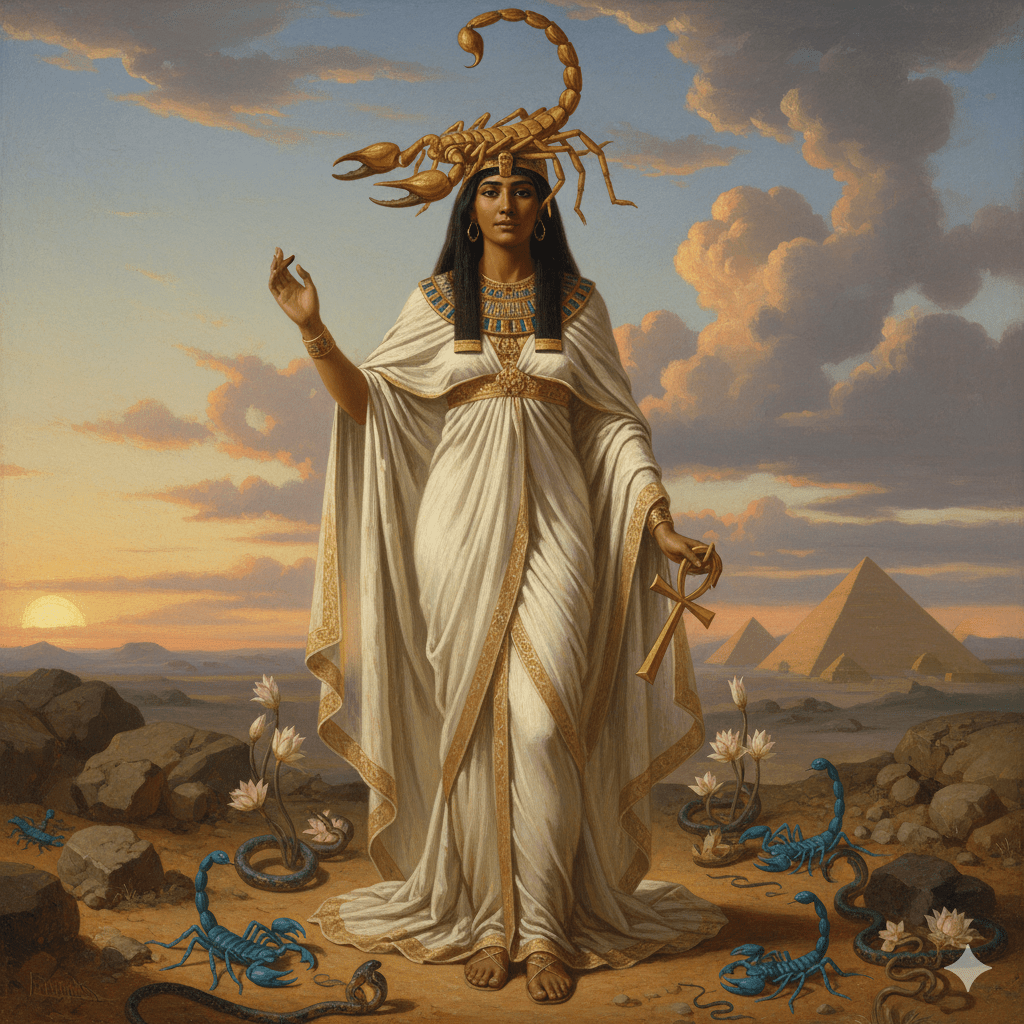
Dinah’s own coming-of-age ceremony is marked by a grand feast and a rite of passage in the Red Tent. The Red Tent referenced in the title is a tent set aside for menstruating women and childbirth. It is during this rite that Dinah dreams of the Goddess who chooses her: Tawaret, the Goddess of Midwifery. True to the signs in her dreams, Dinah learns the skills of midwifery and uses them to help other women who are in need.
Cultural and religious attitudes towards childbirth, menarche and menopause are widespread throughout history and around the world. Concerns regarding ‘impurity’—especially during menstruation and childbirth—led to the introduction of many taboos that secluded and isolated women during certain periods in their lives. With these customs came the need for ritual purification and other such practises that isolated women from the rest of their communities.

Periyachi Amman
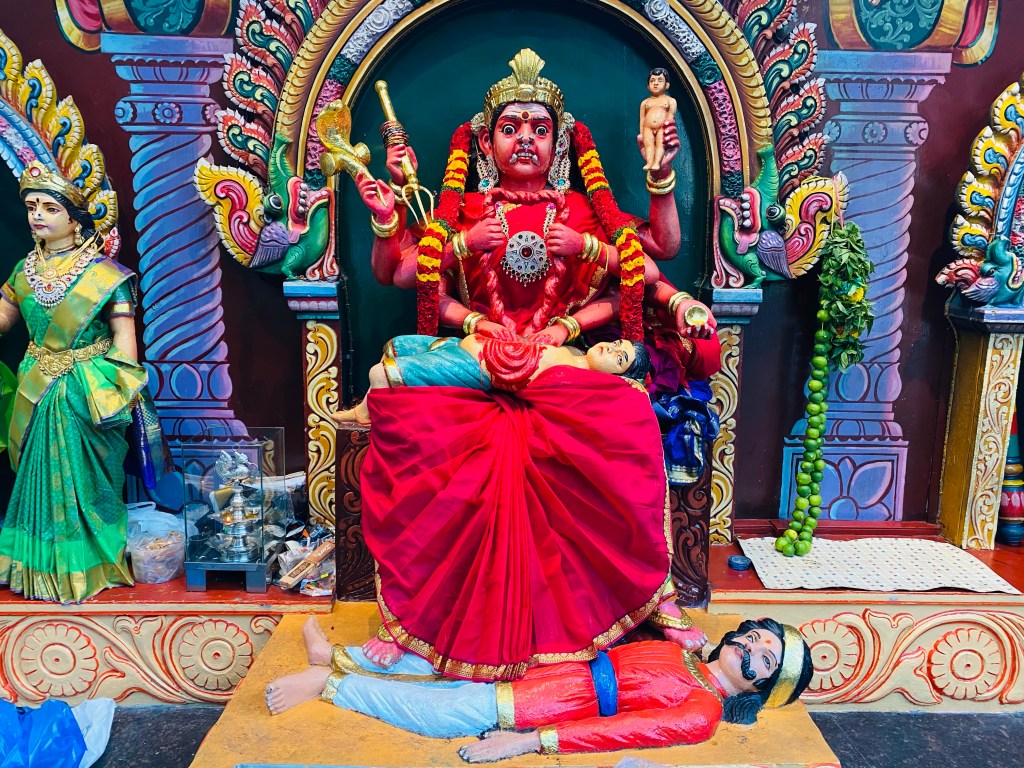
After I read Diamant’s novel, I was reminded of the worship of Periyachi Amman, a Goddess of Midwifery from the Hindu Tamil tradition. She is considered an aspect of the Mother Goddess Kali and I have seen the murti of Periyachi Amman at many temples in Singapore.
Periyachi Amman’s function is a specific one. She is a protector of pregnant women, the unborn child as well as a newborn. When I began to ponder on this concept in my late 20s, I was struck, like lightning, by the idea that the deep love that the Mother Goddess has for all her children predates even our birth. She is there to protect us and care for us even before we are born.
Many a times, when I go to temples where Periyachi Amman’s murti is present, I see the prayers for newborns taking place in a crib by her statue. It is Periyachi Amman that pregnant women invoke to protect the life of their unborn child. It is Periyachi Amman that women—and their families—thank when their child is born. In ancient times, Periyachi Amman was called upon to protect a child that, for some reason or another, others wanted to destroy. In the Tamil tradition, Periyachi Amman is praised for being the best obstetrician and paediatrician.

It is a reality of life that not every child that comes into this world is wanted. I read statistics a few years back that stated that only around half of all pregnancies are planned. The rest, it seems, are an accident; an unexplainable force of nature; something that happens without us meaning for it to happen. But of course, there are other stories, stories of infertility and of desperately wanting children and not being able to have them. The aspect of Santana Lakshmi, in particular, reminds us that children and progeny are one of the eight blessings ashtalakshmi from the Goddess Lakshmi.
A few months back, I had a conversation with a friend After Roe Fell. We were on our way back from Mass at a Catholic Church, an institution that has, in recent centuries, maintained a strong unequivocal stance against abortion. My personal view—and it is one that I am neither lobbying nor imposing on anybody—is that I do not believe in abortion. Who am I to deny an unborn child the right to life? If a soul wants to come into this world to sort through their karma, to make their mark, to do whatever they are destined to do; then who am I to tell that child ‘No’? And if I am one of the parents that God has chosen for the child, then, I will have to accept and to welcome the life that is seeking to express itself through me.
My belief stems from a fundamental truth that I believe: our children are not ours. They come from the Divine. Parents are but temporary custodians of those children. Our children will one day return to their Maker, much like we, too, will one day have to return to our Maker.
In the Catholic tradition, it is Our Lady of Guadalupe that is called to intercede to protect the unborn who is vulnerable. Despite the little that is written about Mother Mary in the Gospels, we do know that she was there to help Elizabeth when John the Baptist was born. While we cannot say for certain that the Virgin Mary was the midwife at John the Baptist’s birth, it was also not uncommon during those times for women to come together to help with the delivery of a newborn.
In the modern context, women are marrying later in life or not marrying at all. This is increasingly the norm in secular and modern societies. It is a trend that cannot be reversed. Beyond the strong—and historically long—relationship that we have already associated with women and children; there is another relationship that has, in recent decades, undergone a transformation. It is the journey of fatherhood.
Through the discoveries and the strides that science has made, we now know that it is the father’s sperm that determines the gender of the child. Without him, there can be no birth. Without him, future generations cannot be born. It is not only the mother’s role that has changed, but the father’s role has changed as well.
Many modern men and women increasingly view starting a family as a ‘sacrifice’. Is it a sacrifice or is it a calling? The sacred mystery is the role that both men and women play in the miracle of life and the mysterious journey of birth that brings life into this world.
I have always found the relationship that Periyachi Amman has with Kali Amman to be a fascinating one. Periyachi Amman, as the Goddess of Midwifery, is the one who is invoked to protect the uncreated, the unborn and that which is yet to be.
As a Mother, she protects and nurtures, within Her, the future that is yet to be. Ma’s Love—the Divine Mother’s love—is even stronger than the love that emanates from one’s own mother. She is there to protect us even before we are born. It is the love of the Universal Mother seeking to express itself for all her children. I have sensed, known and allowed myself to be guided by this abundant love. It is, truly, a blessing, indeed.


 Twinn Swan
Leave a comment